

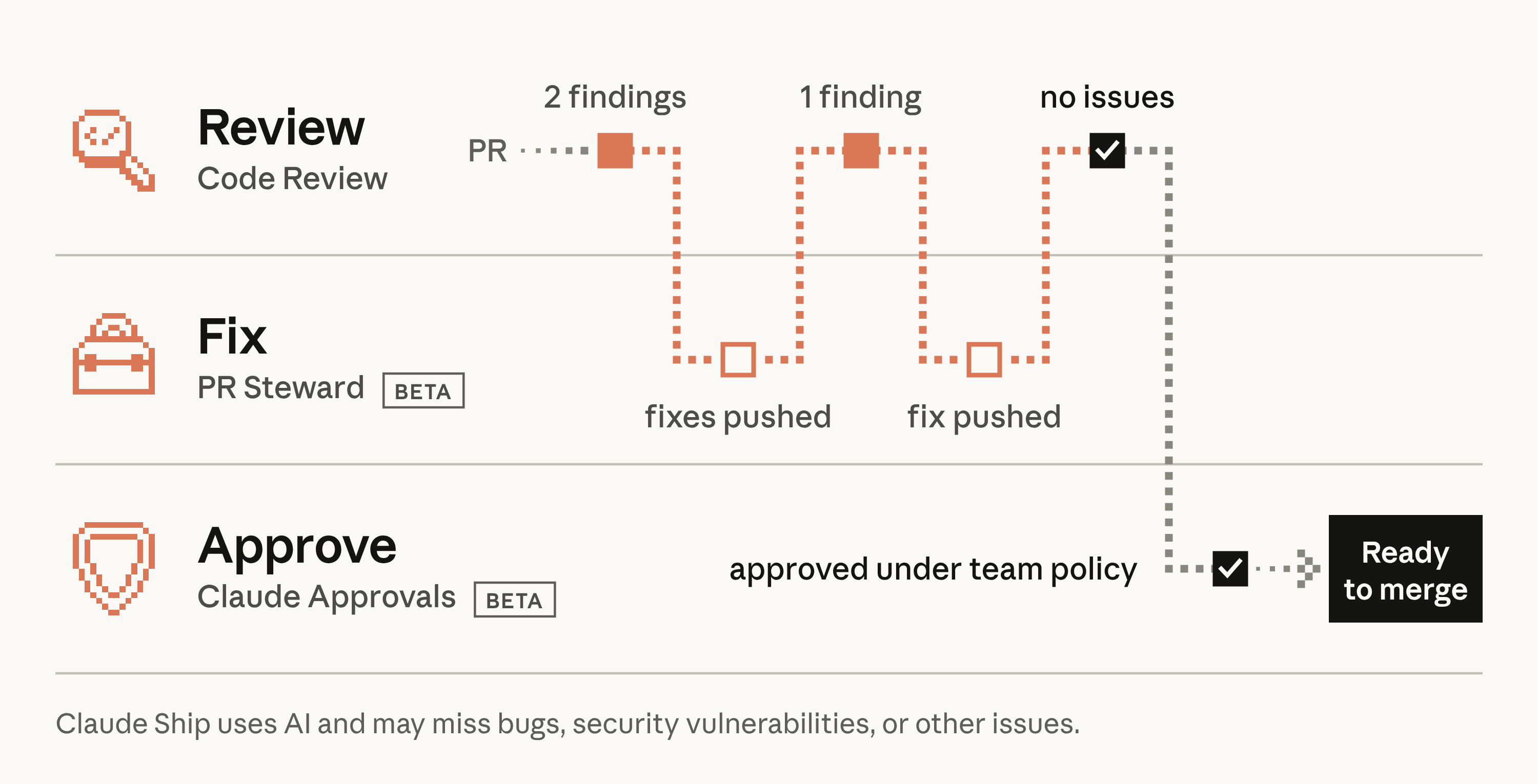
Anthropic introduced Claude Ship on November 23 for Team and Enterprise organizations using GitHub, connecting code review, automated fixes and policy-based approval. A pull request is a proposed set of changes to a project’s code. Code Review is already generally available; PR Steward and Claude Approvals are the new beta components.
The suite targets the work between proposing a code change and getting it ready to merge. Its three agents have different responsibilities, and an AI approval can still miss bugs or security problems.
Review, fixes and approval are separate
Code Review examines a proposed change with the surrounding code and posts findings. PR Steward pushes fixes for failed automated checks, merge conflicts and review comments. Steward is designed not to approve or merge the pull request itself.
Claude Approvals applies a policy stored in the repository. That policy can require people to approve particular changes or allow Claude to approve routine ones. GitHub’s branch protection and required checks determine whether the change can merge.
If a repository permits auto-merge or uses a merge queue and its policy requires no human approval, a change can merge without a person taking action. Anthropic recommends starting approval policies in observe mode, which reports what they would decide.
Organization owners can enable agents one repository at a time. A policy file on the repository’s default branch starts Claude Approvals. Adding that file can also stop automatic Code Reviews for covered paths unless the policy explicitly requests them. Developers can also use the new /ship command, rolling out in Claude Code and its desktop app, to push a change, open a pull request and work through review and failing checks.
Costs and exclusions
The organization agents charge for token usage through usage credits, separately from the plan’s included allowance. Costs depend on the work performed. Code Review and PR Steward support spending limits; Steward has no limit of its own until one is configured.
Claude Approvals has no base charge, but its classifiers and any Code Reviews requested by the policy are billed, including in observe mode. The /ship command counts as ordinary Claude Code usage.
Turning off usage credits in the organization’s Usage settings does not stop agents that are already running or their charges. Stopping those costs requires turning the agents off.
Eligible paid Enterprise organizations can claim $10,000–$50,000 in promotional credits, based on active Claude Code seats, by January 15, 2027 at 23:59 UTC. The one-time claim starts a 30-day window; unused credits expire, and earlier claimants receive no new amount or reset. Trials, reseller-billed organizations, Team plans and recipients of the earlier free Code Review offer are excluded. The credits now cover all three Ship agents, but exclude /ship and other ordinary Claude Code use. Agents continue billing after the credits run out or expire.
Claude Ship is unavailable to organizations using Zero Data Retention, the HIPAA configuration or customer-managed encryption keys. Claude Approvals also cannot start when FERPA or Access Transparency settings are enabled.