
The translation arrived a little late, and for the first few exchanges it was hard to tell whose turn it was. Then Kate Kozuch, a Tom’s Guide reporter trying Google’s new smart glasses at a launch demo, found herself talking about food in Shenzhen with a Mandarin speaker. The other person was familiar with the system. In that setting, they found a rhythm and Kozuch wanted to keep talking.
Google and Samsung opened preorders for Intelligent Eyewear on November 12, with retail availability scheduled for December 10. The frames, made with Warby Parker and Gentle Monster, start at $395 in the U.S. Live speech translation already exists on phones. The glasses make it possible to keep that phone in a pocket during an exchange. The demo doesn’t tell us whether the glasses translate better. It suggests there’s a different question to ask: how much easier is it for two people to keep talking?
What moves from the phone to the frames
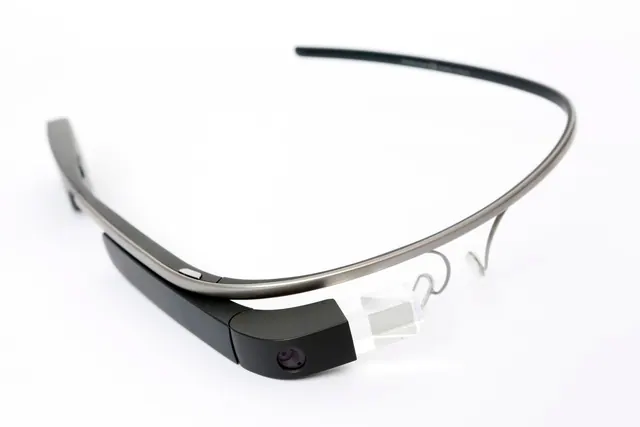
These are glasses with a camera, microphones and speakers that leave the ears uncovered. The lenses do not show subtitles, a map or an answer from Gemini. The camera lets the assistant respond to a question about something in front of the wearer, such as text on a menu. Live speech translation requires the Google Translate app on the paired phone. Google advertises support for more than 70 languages. That describes the range of the service, not how well it handles a particular accent, room or language pair.
On Android, Google Translate already lets people listen through ordinary headphones, take turns with the translation playing aloud, or read it on a screen. A phone can translate a sign with its camera, too. The glasses combine audio and a camera in something the wearer may already have on. For reading a sign with both hands full, the convenience is easy to see. In a longer conversation, the difference is whether staying face to face helps more than having a screen both people can check.
Some of that convenience comes from the mundane decision to make these look and fit like eyewear people would choose anyway. Warby Parker lists several lens types, including prescription options. WIRED’s Julian Chokkattu points out that the eyewear partners give Google and Samsung shops where people can try the glasses before buying. Fit matters here in a way it doesn’t for an app download: a translation tool that needs to be charged and carried separately loses much of its appeal if the buyer doesn’t want to wear it most days. Someone who already wears prescription glasses may gain more from the combination than someone buying a second pair for a single trip.
A translation has to fit into a turn
There is a reason the pauses in Kozuch’s demo matter. In a study of natural conversation in ten languages, Tanya Stivers and colleagues compared the gap between yes-or-no questions and their responses. The average across their sample was about a fifth of a second, and people generally avoided long silences and talking over one another. That is not a target for a translation device. It shows how much information a small change in pace can carry. A pause might mean someone is still listening to the translation; the person facing them could take it as hesitation or an invitation to repeat the question.
Kozuch’s demo offers a useful counterexample to the idea that any delay ruins the experience. Both people adjusted, and the conversation got somewhere. Translation can be worthwhile even if it gives the conversation a different tempo. Chokkattu also tried translation in controlled demos for WIRED. He reported a few errors and found that facing the speaker mattered, as did distance and noise. So even a tool that leaves the hands free can ask people to stand and speak in particular ways. Those constraints matter more in a group than in a quiet exchange between two people. Google’s launch materials don’t establish that the frames make those checks easier, or that they translate more accurately than the phone app.
A screen that gets in the way of one exchange can help in another. Consider a traveler asking which entrance to use to collect a ticket. Hearing a rough translation may be enough to get the traveler to the right side of the building. If the reply includes a time or an address that sounds wrong, putting the text where both people can see it gives them something to point at or type over. A screen doesn’t make the translation correct; it gives the pair another way to correct it. The choice is about whether the moment calls for a quick exchange or a shared record people can check.
The person wearing the glasses also has a better sense of what is happening than the person facing them. The speakers direct sound toward the wearer’s ears without sealing them off. Kozuch heard music leak at higher volume in the demo; that observation doesn’t tell us what a conversation partner can reliably hear. One person may be waiting for a translation the other doesn’t know is still playing. In that situation, agreeing when to speak or switching to shared audio or text may save more time than keeping the phone out of sight.
What the person across from you can see
A camera next to somebody’s eyes can change an encounter even when it stays off. Google has been here before: it stopped selling the later Enterprise Edition of Google Glass in 2023. Speaking to WIRED about the new frames, Juston Payne, who leads product management for Google’s extended reality group, said the earlier Glass had taught the company that unclear signals could make people uncomfortable. This time the product looks more like ordinary eyewear. In a preorder discussion on Reddit, one participant took the light on a Warby Parker frame for a second camera. A Google representative explained what it was. The exchange shows why someone might need an explanation even before the camera is used.
Google describes two different safeguards. An outward light signals when the wearer takes photos or video for their gallery. The glasses are designed to prevent that capture if the light is blocked. For visuals sent to Gemini to answer a question, Google says the glasses are designed to redact bystanders’ faces before Gemini processes the image. The company says those visuals do not go into Gemini History and are not used for training or ads. Photos or videos the wearer deliberately saves and the text of chats have separate treatment. Google also says Private AI Compute, its protected cloud processing system, is coming later. That is a promise about future processing, separate from what a bystander can see today.
Those protections answer different questions. The light is about making gallery capture visible. Face redaction is about what an AI system receives. Neither tells a person whether a translation tool is listening to them at that moment. A brief explanation can do something the light cannot: let the other person decide whether to take part. That matters even for a friendly exchange, where there may be no reason to bring the camera into it. For the wearer, the physical switch also offers a way to use the frames as ordinary glasses when the electronics aren’t wanted.
When it makes sense to keep the phone in a pocket
In the U.S., Warby Parker’s collection starts at $395 and Gentle Monster’s costs $449 to $489, according to Samsung. Both collections are slated for U.S. release; only Gentle Monster is scheduled for South Korea. Google requires a compatible phone and an adult Google account from one of those markets. Google lists recent Pixel and Galaxy models and certain iPhones. Its launch blog says iPhone 13 Pro and later; its compatibility FAQ specifies iPhone 13 or later with at least 6 GB of memory and iOS 26.6 or later. Check the exact phone before preordering. Android features such as Guided Vision, which describes what the camera sees for people who are blind or have low vision, are not available on iPhone at launch.
Samsung’s battery claim is up to nine hours of mixed use. It does not establish how long the glasses will translate continuously on a trip. Check the total for the frame and lenses you need. And the phone is still part of the system. Google’s FAQ says asking Gemini about your surroundings requires a Bluetooth connection to the phone, even though taking a photo can work without it.
The most useful comparison before buying is with a tool already at hand. On a phone, try listening with headphones, then try a conversation with the speaker or the screen visible to both people. Notice when looking down or handling the phone is the part that causes trouble, and when the screen saves the exchange. At a glasses demo, try more than a greeting. Ask a follow-up containing a name or number and see how both people know when to speak and how they would correct a mistake. The glasses make the strongest case when the same kind of exchange happens often enough that reaching for the phone is a recurring nuisance. For occasional translation, the phone already does much of the job. Its conspicuous screen can be a useful part of the conversation.