

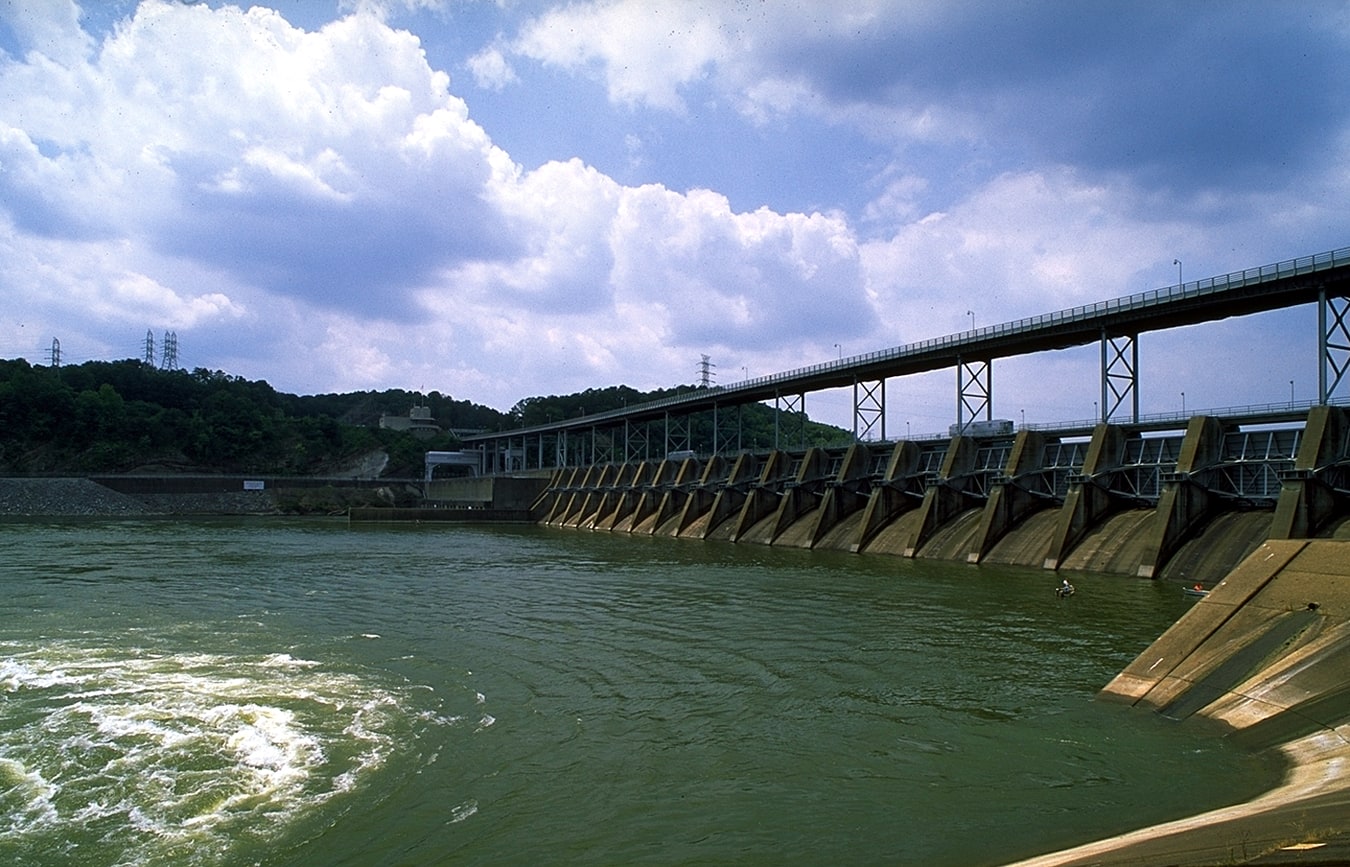
The Tennessee Valley Authority already makes decisions about how much water to release from reservoirs, when to generate power at dams and where to send water for cooling power plants. Its staff work from forecasts, gauges and operating guides. Researchers at Oak Ridge National Laboratory are studying a question that matters to that work. How far ahead can they give planners reliable information about how much water a reservoir can expect to receive or how warm a stretch of river will get?
On November 16, Oak Ridge and chipmaker AMD announced that Lux, a supercomputer built by Hewlett Packard Enterprise, was open to scientific users. Oak Ridge’s project on water in the Tennessee Valley, with Georgia Tech as a listed partner, is among the research efforts allocated time on the machine. The team plans to use AI to work with climate simulations and observations and then test its predictions against existing methods. The machine gives the researchers dedicated computing time. To help manage the river, the resulting forecasts would have to prove useful to people who already have ways to plan for high water, dry periods and hot summers.
What the computer adds
A river forecast for the coming week and a water outlook for a future season are different products. One can help someone plan around an approaching spell of rain. The other might put a probability on a reservoir running low during a period when electricity demand is high. At longer timescales, the Oak Ridge project is asking what can be predicted reliably about water availability, streamflow and river temperature, and how that ability changes with the time horizon. Its research spans weeks to years.
The team plans to use an AI model built for Earth and land systems. The model will draw on large-scale climate patterns and local conditions in the places where water collects and flows. A computer simulation represents how parts of the Earth system behave under a set of physical assumptions. Observations give researchers a record of how the real system behaved. Simulations can give researchers more situations to learn from. Measurements can show whether those lessons hold on a real river.
Lux was designed to support both traditional simulation and the work of training and running an AI model. Training uses examples to adjust the model so that it can make predictions on new inputs. Oak Ridge already has a larger supercomputer, Frontier, and gives a concrete example of how teams with allocations on both machines can use them together. Frontier can run simulations and save the results to a shared storage system. Lux can train on the data stored there. That arrangement gives a team a way to use Frontier’s output while putting the training work on dedicated AI capacity. The facility describes this as an option for teams with time on both machines. Oak Ridge’s water project has described the data it wants to use and the comparisons it wants to make. Its allocation establishes that it can start using Lux for research.
There are practical reasons to want that capacity beyond training a bigger model. A team can compare versions that use different mixtures of simulated and measured data, for instance, or check whether a method that works for one watershed carries over to another. That gives the scientists a chance to work out where the model is learning something useful about the river and where it is relying on a pattern that happens to be common in the examples it saw. Oak Ridge’s research description specifically says the team will examine which signals contribute to forecasts and how the forecasts perform at different lead times.
A forecast has to survive a comparison
The benchmark that put Lux at No. 14 on the November TOP500 list measures how fast a submitted system solves a large mathematics problem known as Linpack. Lux’s measured result was about 221 quadrillion numerical operations per second in the test. In an earlier interview with Jane McCallion of ITPro, Oak Ridge computing chief Scott Atchley made the case that performance at this scale can carry over to real scientific jobs on Frontier. The ranking establishes that Lux can do a specific kind of numerical work at scale. To find out whether it can produce a better river forecast, the team needs a comparison with the predictions forecasters already have.
Oak Ridge says the water team will compare its forecasts against baseline methods and assess their reliability and uncertainty. Baselines matter because hydrologists already make probabilistic forecasts. The National Weather Service has long evaluated predictions that show a range of possible river flows. One method the weather service describes is to reconstruct forecasts for past years, leaving the year being tested out of the data used to produce the forecast for that year. The measurements from that year then supply an answer the forecast can be judged against. For the Tennessee Valley model, a fair comparison would give both methods the same starting dates, locations and lead times. Breaking the results down in that way matters. A model could add useful information about spring flows and contribute little during a late-summer dry spell. An average across the whole year could hide either finding.
There is a difference between predicting an exact river temperature and estimating the chance that it will rise above a level a utility cares about. The second kind of forecast can be useful even when the precise temperature remains uncertain. A forecast that assigns a 30% chance to unusually warm river water should see that outcome about three times in ten across many comparable forecasts given that probability. Researchers call that calibration. Real measurements can show when an apparently confident prediction should carry a much wider range.
The authority’s River Forecast Center illustrates how that evidence might reach people outside the lab. Its staff balance water supply, hydroelectric generation, flood protection, navigation and other uses, and some of those goals draw on the same water at the same time. In a profile published by the authority, water resources engineer Daniel Saint describes one of those choices. When a power plant is close to the permitted temperature for water it discharges, his team can work with operators to adjust cooling tower use or with the River Forecast Center to change the flow. A reliable warning further ahead could give the teams more time to prepare. Oak Ridge’s project describes the tests it plans to run to find out whether such a warning is possible.
Who gets time on Lux
Researchers need an allocation, which is permission to run work up to a budget of computing time. Oak Ridge says Lux has 3.5 million node-hours a year, with roughly half going to the federal Genesis Mission. A node is one server unit in the supercomputer. Ten nodes running for two hours use 20 node-hours. The facility says AMD will use the rest for development and testing and make a portion available to public and private partners. It describes paid proprietary access at the Department of Energy’s user-facility rate with a minimum commitment of 175,000 node-hours over six months. A team pays for the right to schedule jobs against that budget, which it can spend on many small jobs or on fewer large ones. The arrangement gives the federal program dedicated time and gives the company time to develop its own technology on the same machine.
That matters to teams with different ideas about what an AI research project should deliver. An Oak Ridge effort called Pipit, also listed for Lux, plans to turn prototypes into reusable processes for training specialist models in materials engineering and manufacturing. Oak Ridge says it plans to share the resulting models, data and benchmarks on the Genesis platform. In that case, a useful result could be a tool another research group can build on. The water project has a different test because the people who might ultimately use its findings already operate a river system with years of observations, established tools and schedules.
The federal Genesis Mission started with a November 2025 executive order. It directs the Energy Department to bring together scientific data, computing and experimental facilities and to report to the president on whether the broader platform is operational, who uses it and what scientific advances or prototypes result. Lux’s opening shows that one piece of that platform is available for research. The allocations identify projects expected to use it. The water team could contribute to the science by identifying the seasons and forecast horizons where the method is useful.
The decision downstream
The usefulness of a forecast depends on when a planner can still do something with it. Consider a warning that river temperatures are likely to approach a plant’s discharge limit. A warning a few weeks ahead might be useful for checking equipment and testing possible release schedules, while a shorter-range forecast might guide the actual decision. A false alarm could prompt staff to spend time planning a change that never becomes necessary. The decision to alter generation or release water would still depend on the authority’s observations and operating limits.
The first result worth seeing is how the model performs at the places and times where the extra warning could change a decision. An improvement concentrated in the weeks before a hot spell would mean something different from a small improvement spread evenly across the year. With that detail, the people running the river could judge whether the information from Lux is worth putting into their schedules.