
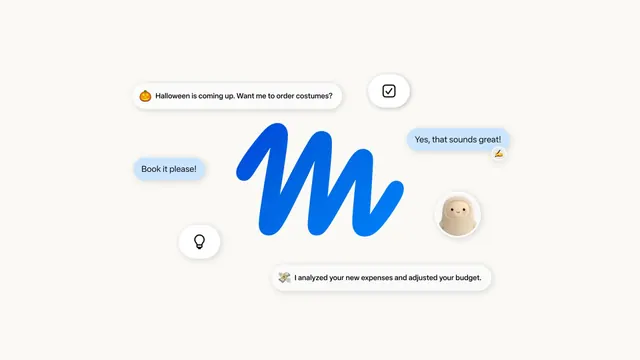
When a consumer technology reaches the point where it can book a weekend trip, juggle medical follow-ups, or navigate a convoluted web checkout, we tend to talk about it as an intelligence breakthrough. We examine whether the model makes fewer logical mistakes, how fluidly it writes, or how cleverly it plans around a flight delay.
That framing misses the actual commercial transformation underway. In an analysis of the emerging personal assistant landscape, Axios reporter Ina Fried noted that the era of the personal agent has arrived, driven by systems designed to act on our behalf rather than simply answer questions. The prize in this race, as Fried pointed out, is not merely delivering answers; whoever becomes the default consumer agent holds a repository of human context far more intimate and continuous than any search engine query log ever captured.
The primary competitive moat in artificial intelligence is no longer raw frontier capability. Instead, the durable asset is context custody: the accumulated graph of your relationships, your unspoken preferences, your delegated administrative permissions, and the lingering state of your unfinished intentions.
A model that merely chats is easily swapped out whenever an alternative service shaves a penny off API pricing or answers questions with greater polish. But an agent that already holds your authorized accounts, understands your spouse's scheduling constraints, knows your travel booking idiosyncrasies, and is currently tracking three unresolved disputes with your utility company is an entirely different operational reality.
The company that captures this role wins more than a subscription. It owns the everyday friction of leaving.
The Shift From Answering Questions to Taking Action
The consumer AI landscape spent two years training the public to interact with text boxes that behave like knowledgeable consultants. You prompted, the system generated prose or computer code, and you copied the output back into your actual digital life. You remained the operating system of your own affairs, moving data between windows and manually approving every step.
The shift toward autonomous agents alters that boundary. Instead of retrieving text, an agent is tasked with taking physical or administrative actions: browsing the web, purchasing goods, managing calendars, placing calls, and synchronizing workflows across services.
This transition has touched off an escalating competition among major consumer platforms. Aside from specialized offerings like Instinct or Grok Bot, Apple is fielding an upgraded Siri tailored to deeply integrated hardware workflows, and OpenAI is widely expected to introduce an agent offering after hiring the creator of OpenClaw. Yet the clearest operational blueprint of what a mass-market personal agent looks like arrived on September 8, 2026, when Meta launched Muse across the United States.
Offered through a standalone mobile application and WhatsApp across both free and paid subscription tiers, Muse illustrates how consumer agents must be constructed if they are to carry out multi-step work in the wild. Unlike ephemeral browser sessions, Meta says each Muse user is allocated a dedicated cloud virtual machine equipped with an automated web browser. This infrastructure allows the agent to persist: if a user instructs it to monitor ticket prices or manage a complex, multi-day administrative chore, the VM keeps running and interacting with web services long after the mobile app has been dismissed.
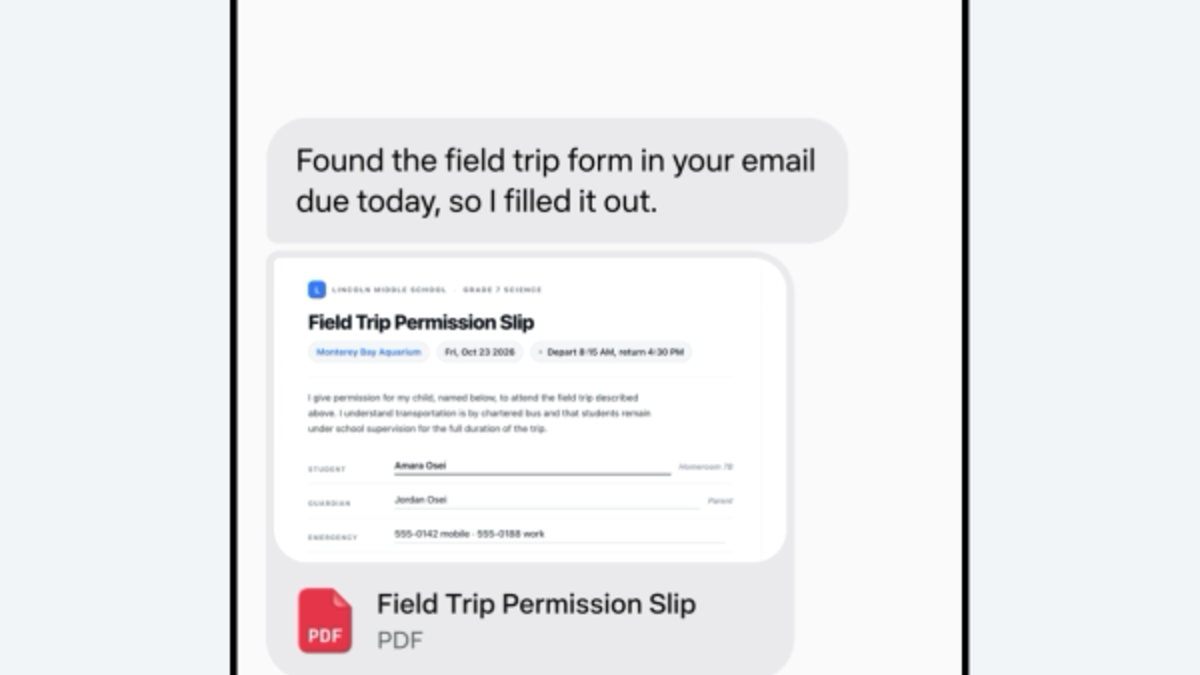
To perform these tasks, Meta states that Muse can browse online storefronts, populate checkout forms, compose emails, organize travel itineraries, and complete payments. Yet the foundational capability that enables such helpfulness is not conversational aptitude; it is permissions. An agent cannot book a flight without access to identity profiles, credit card rails, calendar availability, and external travel platforms. The moment an assistant begins doing actual chores, its primary interface ceases to be text. Its primary interface is access.
Architecture as a Security Surface: Inside Meta Muse
Granting a remote virtual machine persistent agency over personal accounts introduces immense security trade-offs. The moment software is instructed to browse public websites and execute financial orders, it becomes susceptible to indirect prompt-injection attacks, rogue scripts, and account hijacking.
Meta's documented engineering strategy for Muse offers a window into how platform vendors are attempting to mitigate these structural vulnerabilities. According to Meta's published architecture disclosures, the system does not allow its core planning agent unconstrained access to sensitive data or external networks. Instead, the company implemented a separate supervisory component dubbed the Sentinel.
Under this model, the Sentinel acts as a protocol gatekeeper:
- Network egress and tool connectors are mediated by the Sentinel, keeping the core generative agent partitioned from unchecked internet access.
- The planning model is kept isolated from raw account passwords and financial credentials, which are processed through protected execution paths.
- Multi-layered defenses are deployed against prompt-injection attacks, complemented by a public bug bounty offering up to $300,000 for critical vulnerability disclosures.
- Irreversible operations—such as final payment authorizations and high-stakes administrative changes—are subject to explicit user approval checkpoints before execution.
| Architectural Layer | Launch State (September 2026) | Planned State (Disclosed Roadmap) | Primary Purpose |
|---|---|---|---|
| Compute Environment | Dedicated cloud VM with automated browser | Confidential VM | Continuous task execution without local device runtime |
| Network & Credential Gate | Sentinel supervisory proxy | Sentinel supervisory proxy | Prevents raw model access to passwords and isolates egress |
| Data Cryptography | Infrastructure-level tenant isolation | Hardware-enforced cryptographic boundary | Prevents host-provider visibility into running VM state |
| User Oversight | Audit trails and explicit approval prompts | Iterative permission scopes | Verifies high-stakes actions and logs tool executions |
| Training Pipeline | Opt-out system; Meta says training trajectories are sanitized | User choice remains part of the product | Limits, but does not eliminate, the privacy tradeoff |
This architectural blueprint reveals the immense systems engineering required to run an agent reliably. Yet it also exposes an essential caveat for enterprise decision-makers and privacy-focused observers.
Meta explicitly acknowledges that while its launch architecture isolates individual tenant workloads at the infrastructure tier, it does not cryptographically block Meta itself from accessing the underlying virtual machine environment when operational intervention, service maintenance, or security demands require it. The company has announced that a Confidential VM architecture—designed to mathematically and cryptographically prevent the infrastructure host from peering into running instances—is planned for deployment later in 2026.
For now, security at launch rests on operational controls, software compartmentalization, and policy rather than a cryptographic guarantee that the provider cannot see the VM. For users deciding how much authority to surrender, the distinction between a planned protection and a launch feature matters.
The Anatomy of the New Lock-In
If you ask consumers why they stay with an operating system, an enterprise cloud provider, or a productivity suite, they rarely cite brand affinity. They cite the cost of moving. They stay because moving custom software configurations, database schemas, and daily habits to a competing service incurs an exhausting coordination penalty.
Personal AI agents will turn this dynamic into an art form.
When you configure an agent like Muse, the platform asks you to connect your primary services: messaging networks, airline portals, personal calendars, work tools, and payment methods. As you live alongside the system, it progressively records behavioral trajectories. It learns which train car you prefer, how you phrase business correspondence, which family members need to be looped into specific medical reminders, and which local service providers you trust.
None of this context is neatly packaged in an industry-standard format. There is no common standard for exporting five months of multi-agent state machines, interrupted task queues, and delegated web authorizations to an alternative engine.
Consider the practical operational barriers to switching assistants:
- Authorization re-establishment: Every integrated external tool must be independently authorized, scoped, and credentialed within the new platform's unique security infrastructure.
- Loss of negative context: Over time, an agent learns what *not* to do—which vendors to avoid, which flight layovers are unacceptable, and which automated suggestions you systematically reject. Leaving resets this calibration back to zero.
- Interrupted administrative state: Long-running, asynchronous errands (such as tracking an insurance reimbursement or waiting for a concert ticket release) cannot simply be migrated mid-stream to an outside model.
This dynamic illustrates why the competitive struggle among Meta, Apple, Google, and OpenAI is so ferocious. The vendor that captures the consumer's initial administrative portfolio captures an extraordinary structural barrier to entry. The underlying intelligence layer—the raw model itself—might be matched or surpassed by a competitor six months down the line, but the sheer friction of re-educating a new assistant will convince many consumers to remain exactly where they are.
Beyond the Abstract: The Mechanics of Agency
Public discourse around consumer AI frequently collapses into an oversimplified debate about privacy versus convenience. Tech enthusiasts praise the frictionless experience of an automated life, while privacy advocates warn of surveillance risks.
Yet treating this balance as an abstract moral choice obscures the mechanical reality of how these platforms function. The trade-off is not about whether you care about data protection in the abstract; it is about whether you retain operational inspectability and unilateral authority over the machine executing your life.
From an editorial perspective, I care very little about whether a personal agent addresses me with warm, humanlike charm or how witty it sounds when composing a memo. I evaluate an agent by a far more rigorous, sober baseline: Can I clearly inspect every memory file it has synthesized about my life? Can I surgically correct an incorrect inference before it informs future actions? Can I permanently delete specific interaction trajectories without breaking the rest of my setup? And critically: Can I export the system's operational memory and take it with me to a competitor?
Meta has built visible levers into Muse that address several of these operational requirements. The company states that users maintain direct control over which outside services are connected, have access to an inspectable audit trail tracking the agent's actions, can sever tool connections at will, and possess the right to opt out of having their interaction data used for model post-training.
Running a personal agent inside an advertising-supported company brings an old tension into a much more intimate product. Meta says personal data generated within Muse is not routed directly into its automated advertising systems. The company also acknowledges that Muse's downstream web activity—the sites its browser visits and the transactions it initiates—can indirectly inform advertising elsewhere. Unless a consumer opts out, Meta says sanitized operational trajectories may also be used to train future models.
These conditions underscore why consumer trust cannot be won through a marketing campaign. Trust is a functional systems property. It depends on whether a platform treats context as a delegated loan from the user, or as proprietary platform collateral designed to prevent migration.
The Measurable Signals Ahead
The arrival of persistent, browser-enabled systems like Meta Muse demonstrates that the consumer technology sector has crossed a distinct rubicon. The race to construct the default assistant will not be settled by public benchmark leaderboards, context window lengths, or synthetic coding evaluations.
Instead, three practical signals matter:
First, observe whether Meta successfully deploys its planned Confidential VM hardware infrastructure before the close of 2026. Shifting from administrative isolation to provable cryptographic isolation will determine whether security-sensitive users can safely treat cloud agents as genuine digital proxies.
Second, monitor how the regulatory and technical ecosystem approaches context portability. If independent developers, open standards groups, or antitrust regulators begin defining structured protocols for moving authorized permissions, relationship graphs, and personal memory logs between competing agents, the switching moat will flatten. If context remains locked in proprietary corporate silos, platform entrenchment will harden dramatically.
Third, watch how competing platforms position their revenue models. If independent consumer agents emerge supported purely by predictable subscription fees, their structural incentives around user data will diverge sharply from ad-funded models that depend on ecosystem engagement.
The company that manages your personal agent can build an unusually complete catalog of what you intend to do, not merely what you searched for. That is the real prize of this platform race. I would judge the winner by a simple test: can I inspect that memory, correct it, delete it, and take it somewhere else? If the answer is no, the convenience is also the lock.