OpenAI disclosed new defenses against extracting its models’ hidden reasoning on November 20, reporting sharply lower attack success in an internal comparison of GPT-6 Astra and GPT-6.2 Astra. The changes aim to make it harder to copy advanced capabilities into another model without comparable safety protections.
Hidden reasoning, also called chain-of-thought, is the intermediate work a model generates before its answer. OpenAI distinguishes those protected traces from the explanations and reasoning summaries users normally receive.
What the tests measured
In adaptive black-box tests, automated attackers changed their approach in response to the defender. Across six attacker models, the average success rate for extracting reasoning from an earlier request fell from 54.0% against GPT-6 Astra with its original safeguards to 0.2% against GPT-6.2 Astra with updated safeguards. For reasoning from the current request, the rates were 22.9% and 0.9%.
These are OpenAI’s internal evaluation results. The comparison changes both the model generation and its safeguards, so it does not isolate the effect of any one defense or establish a real-world failure rate. OpenAI says it is also applying selected improvements to GPT-6 Astra.
Protections around requests and accounts
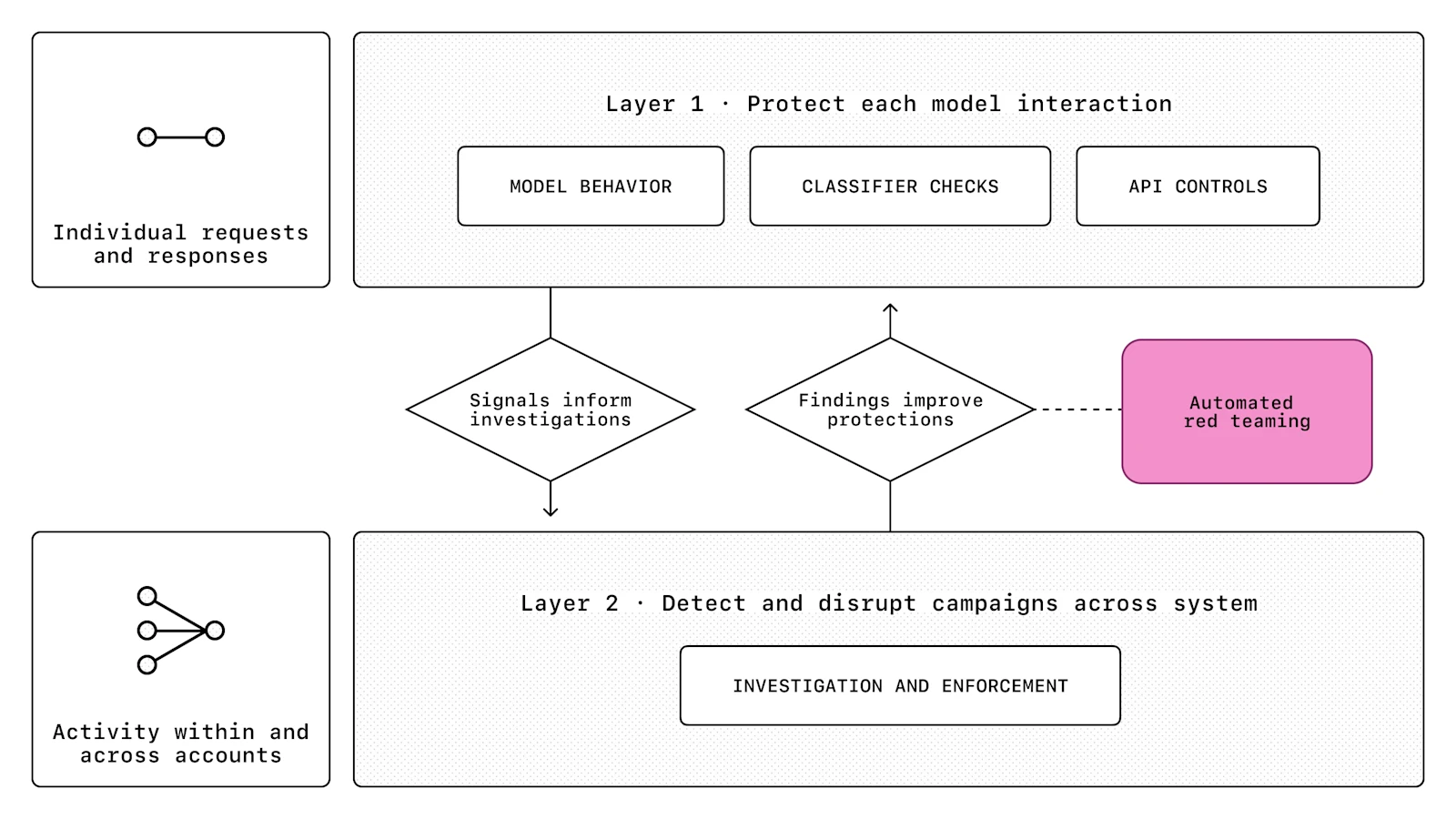
OpenAI says its approach combines training models to refuse extraction attempts, checking inputs and outputs, and limiting reuse through the API. Output checks also cover tool-call arguments, where a model could leak reasoning without putting it in the visible answer.
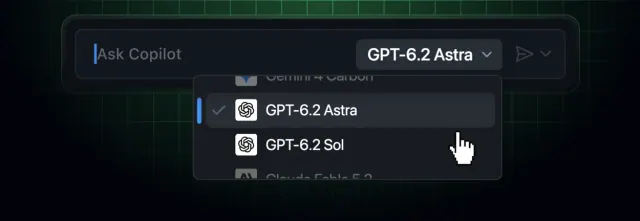
For GPT-6.2 Astra and Sol, protected reasoning is tied to the conversation history that produced it. Rewriting an earlier message causes the API to drop subsequent reasoning; older model families with weaker protections cannot read those models’ protected reasoning.
The company also investigates coordinated activity across accounts and shares indicators with other providers. It says weekly enforcement against unauthorized distillation campaigns has ranged from thousands to tens of thousands of accounts this year. That is an account count, not a count of distinct people.
Distillation is a normal technique for training one model on another’s outputs. OpenAI’s stated concern is unauthorized capability transfer without equivalent safeguards. In its internal study, after a further round of reinforcement learning, students trained on exact reasoning traces scored higher at the largest tested allowance for computation when answering, while students trained on summaries scored higher with smaller allowances. Protecting those traces does not establish that all capability transfer has been prevented.