
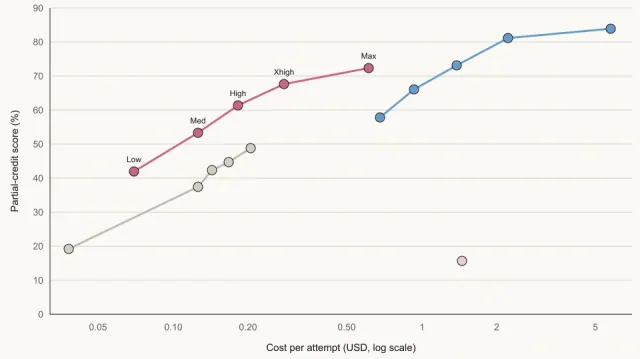
On October 7, Anthropic released claude-haiku-5-5, updating its smallest model family for high-volume workloads such as classification, summarization, data extraction, and coding subagents. The model is available through the Claude Platform API, Amazon Bedrock, Google Cloud, and Microsoft Foundry. It features a 1-million-token context window, a maximum output of 128,000 tokens, multimodal text and image inputs, and configurable reasoning.
Alongside the model launch, Anthropic introduced monthly Claude Platform API credits for qualifying Claude Max and Claude Team subscribers, while cutting cache read prices for Sonnet 5.5. However, developers running large prompts face a steep pricing threshold, as well as migration changes involving token accounting and thinking blocks.
Two-Tier Pricing and Tokenizer Shifts
Anthropic advertises Haiku 5.5 with lower base rates than its predecessor, but the lowest tier applies only to requests where prompt length does not exceed 100,000 tokens. Once a prompt crosses the 100,000-token boundary, the rate quintuples across all input, output, and caching operations for that request.
| Pricing Tier | Input (per 1M tokens) | Output (per 1M tokens) | Cache Read (per 1M tokens) | 5-Minute Cache Write (per 1M tokens) | 1-Hour Cache Write (per 1M tokens) |
|---|---|---|---|---|---|
| Prompts <= 100,000 tokens | $0.10 | $0.50 | $0.01 | $0.125 | $0.20 |
| Prompts > 100,000 tokens | $0.50 | $2.50 | $0.05 | $0.625 | $1.00 |
This pricing model charges the higher tier across the request once the prompt threshold is crossed, rather than applying the higher rate solely to the overflow tokens. As an agent’s tool history grows, a later request can enter the higher tier.
Effective context costs are also altered by a new tokenizer. Anthropic notes that the Haiku 5.5 tokenizer registers approximately 30 percent more tokens on identical text compared to Haiku 4.5, with exact variance depending on content.
Separately, Anthropic halved prompt cache read pricing for Claude Sonnet 5.5 on October 7 from $0.20 to $0.10 per million tokens. Cache write rates and base Sonnet 5.5 pricing remain unchanged. Anthropic claims this price cut lowers total costs for most agentic workloads by around 20 percent.
Migration Requirements and Performance Metrics
Migrating existing integrations to claude-haiku-5-5 requires adjusting API parameters and response handling. Haiku 5.5 is the first model in the Haiku family to support adjustable reasoning effort. It ships with adaptive thinking turned on by default at a medium effort setting.
Requests retaining Haiku 4.5’s manual extended-thinking configuration with budget_tokens receive an HTTP 400 error. In addition, because the model produces reasoning content, responses can begin with thinking blocks, which downstream parsers must be configured to process without failing.
Anthropic claims Haiku 5.5 is its fastest model running at standard speed, though it notes Opus Fast Mode remains faster. On company-reported evaluation suites:
- On an offline subset of OSWorld 2.1, Anthropic reported Haiku 5.5 scored 72.4 percent, compared to 83.9 percent for Sonnet 5.5.
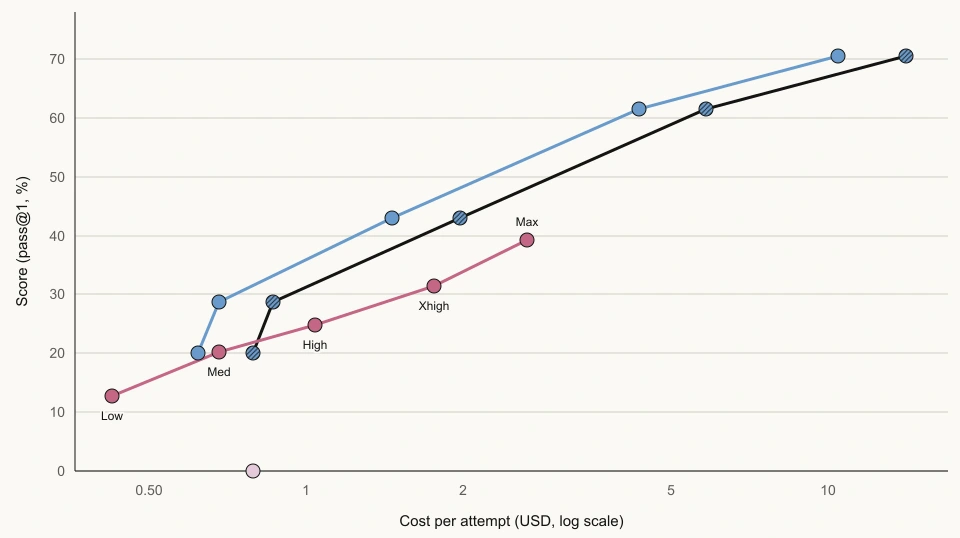
- On Terminal-Bench 4.0, Anthropic reported Haiku 5.5 achieved 39.2 percent, compared to 70.6 percent for Sonnet 5.5.
The scores describe Anthropic’s tests at particular effort settings; they do not establish reliability across every production workload.
Subscription API Credits and Allocation Limits
Max and Team plans also include monthly Claude Platform API credits, separate from subscription usage limits:
- Max 5x subscribers receive $100 per month.
- Max 20x subscribers receive $200 per month.
- Team accounts receive $20 per Standard seat and $100 per Premium seat. Team credits pool into a single organization balance, capped at an organization-wide maximum of $500 per month.
Credit eligibility requires an active Max or Team account in good standing for at least seven days. Free, Pro, and Enterprise accounts are ineligible. Eligible accounts must claim their allotment through the web interface under Billing at claude.ai by linking a single Claude Console organization. The person claiming must be the Max subscriber or a Team Owner/Primary Owner, and hold an Owner, Admin or Billing role in the Console organization. No credit card is required to claim the allowance, and Anthropic notes rollout is occurring over several days rather than immediately reaching all accounts.
The monthly credits expire at the end of each billing cycle without rollover and are consumed before any purchased prepaid balance. They apply to calls across all available models on the Claude Platform API, the Console Playground, Claude Managed Agents, and the Agent SDK.
The credits do not cover Amazon Bedrock, Google Cloud Vertex AI or Microsoft Foundry charges, interactive Claude Code sessions, or extra usage in Claude, Claude Code and Cowork. They do not increase those products’ plan limits.
Self-run claude -p and Agent SDK calls can use the credit when authenticated with an API key from the linked Console organization. Signing in with a Claude subscription instead draws from plan limits; runs started through a Code IDE extension, GitHub Action or desktop app remain excluded.
When the credit runs out, API requests stop if the organization has no other balance. Purchased credits or auto-reload keep usage running at the usual charges; organizations invoiced through Anthropic sales continue to be billed normally.