
On October 7, Beijing time, a user on OpenAI's developer forum reported seeing a usage reset arrive. The tracker LimitBell had reproduced Tibo Sottiaux's statement that the reset was processed after a community vote. OpenAI's promise to offer improvements or more usage had produced a result people could see in their accounts.
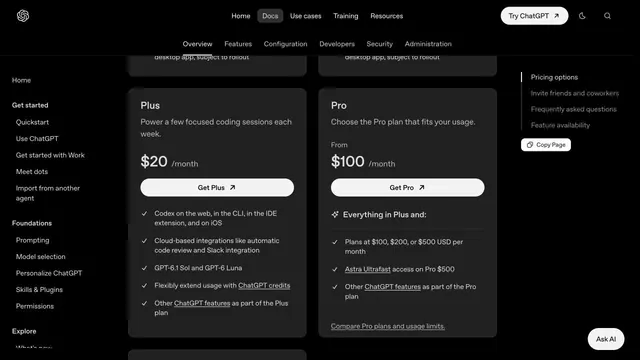
For someone stopped by a quota, that means a chance to get back to work. But the reset arrived while OpenAI was changing a more lasting part of the service: the allowance included with a $200 Pro subscription. Qualifying existing subscribers can keep their previous allowance through October 29; after that, they move to the lower one. The monthly bill stays the same.
I would judge the 28-day campaign by whether it helps subscribers plan beyond the next reset. Useful new features deserve credit. So does responding when users say they need more access. Neither settles how much work a customer can expect a recurring payment to support.
What OpenAI shipped, and why users still wanted a reset
Sottiaux announced the campaign on October 4 in the United States, October 5 in Beijing. As Liu Yao reported for PC Watch, OpenAI promised a clear improvement relevant to most Codex or ChatGPT Work users each day for 28 days, or a full reset. The pledge did not require a major model release every day, and it did not guarantee 28 resets.
It followed a difficult launch for GPT-6.1 Sol. In an October 2 statement reproduced on OpenAI's forum, Sottiaux apologized for slowness, attributed it to a large load spike during the first two days, and said speeds had recovered. He also announced an upcoming reset. That was an earlier response, separate from the Day 2 reset reported on October 7 in Asia.
Day 1 brought roughly 50 percent faster default text generation from GPT-6 Astra and GPT-6.1 Sol, according to OpenAI's help documentation. Users do not need to select Fast or Ultrafast to receive it. A complete task may improve by less: reasoning, tool calls and other steps still take time.
Day 2 reached several audiences. OpenAI's API changelog recorded a Decisions API beta and a simplified set of three paid API usage tiers: Build, Launch and Grow. Those changes concern developers buying API access, rather than the allowance attached to a ChatGPT subscription. The community's campaign tracker also listed a Meetings beta for Pro and Business users on macOS.
For Codex users, free Auto-review offered a more direct benefit. It uses a second agent to assess approval requests for potentially risky actions. This is the permission step in agent work, separate from reviewing a pull request for code quality. Users signed in with ChatGPT could use it without consuming their plan allowance.
Still, the releases ended with a reset. LimitBell reproduced Sottiaux's explanation that the community vote favored one despite the four updates. On the forum, sam.saffron argued that free Auto-review was significant; curt.kennedy subsequently reported seeing the reset go through. In the Day 2 discussion, btsinfo made a practical argument for offering releases and resets together: exhausted users needed enough usage to try the new features.
That response helps explain why counting releases misses part of the complaint. An approval feature can save usage during supervised work, while a meeting tool serves another need. Someone unable to continue a coding task may value both and still want their generation allowance refreshed.
OpenAI distinguishes an automatic reset, which applies without user action, from a banked reset saved for later activation. Each promotion has its own eligibility and timing. The public reports establish that a reset occurred, without establishing identical treatment for every account. They also provide no reason to assume the reset permanently increased the underlying allowance.
The same invoice can buy a different working week
OpenAI's Pro policy lists plans at $100, $200 and $500 per month. New Pro 200 subscriptions that do not qualify for grandfathering receive a lower allowance than previously offered. Customers qualify for the older allowance if they had an active Pro 200 subscription at any point from September 22 through September 29 at 10 a.m. Pacific. They can retain it through October 29 while subscribed. After that date, the lower allowance applies, with the price still $200.
The company links the change to increasingly efficient models. That explanation matters only if the efficiency translates into useful work for the subscriber. A person using a model for short requests may experience a change differently from someone asking an agent to investigate a large codebase. The policy does not show how those workloads compare before and after the reduction.
The October 5 study by SemiAnalysis's Andrew Megalaa, Max Kan and Dylan Patel offers a way to examine the change. The authors isolated token types and measured usage-meter movements, reporting that OpenAI had halved the $200 plan's allowance. Their subscription comparisons depend on the model and assumed workload. They are measurements of access under particular conditions, rather than a universal count of tasks a customer can finish.
For a subscriber who previously fitted a week's work into the old allowance, the important question is what still fits. If the same work now exceeds the limit, the choices may include doing less, changing the workflow or paying for more access. The bill can remain unchanged while the service becomes less useful to that customer. It would nevertheless be inaccurate to describe the policy as a nominal price increase across all subscriptions.
My concern is how much adjustment subscribers are expected to make. People can choose a cheaper plan, pay more or try a competitor when they understand the trade-off. That decision becomes harder when the practical value of a plan depends on shifting allowances and occasional resets.
OpenAI can reasonably point to improvements that reduce the usage needed for a task. Customers need evidence of those savings on work they recognize. A faster response or a new bundled feature may be welcome without compensating for a lower allowance in an established workflow.
Slow responses and bad answers need different fixes
The launch slowdown gives the capacity argument a concrete basis: Sottiaux attributed it to a load spike. It does not explain every complaint about GPT-6.1 Sol.
Waiting too long for a correct answer, receiving a quick but unusable answer, and running out of usage are different failures. They can all interrupt the same working session. A speed improvement helps with waiting; a reset helps with an exhausted allowance. Neither demonstrates that the next answer will be more reliable.
The Day 2 forum discussion illustrates why quality claims need care. Alongside the request for more usage, merefield described an initially disappointing test and a better subsequent attempt. That is useful feedback about an individual's experience, but it cannot establish a general change in model capability. Nor does the public evidence establish that OpenAI deliberately weakened the model to cut costs. The cause of a particular bad result remains unknown without further investigation.
This leaves OpenAI with more to explain than how quickly text appears. If a workflow has become unreliable, users need to know whether the problem has been reproduced and what changed to address it. A clear account of affected tasks would do more to resolve that complaint than another speed figure alone.
Subscribers do not need to diagnose the service's internal systems before asking for better results. They do need responses that address the failure they experienced. A reset is tangible compensation for lost working time, but it cannot stand in for fixing a recurring problem.
How long can generous access last?
Serving more people while supporting more demanding work puts pressure on both capacity and costs. OpenAI has described the difficulty of planning for that growth. In a July 31 essay, CFO Sarah Friar said its models reached more than one billion active users and more than two million businesses. Those were dated company figures, not a count of paying subscribers. She described infrastructure planning years ahead of demand, as well as software improvements that reduced serving costs.
An agent asked to investigate and fix a problem may make repeated searches, edits and checks before it finishes. A fixed monthly fee makes that uncertain workload easier for the customer to budget. The provider still has to accommodate the requests, including periods when many customers want to run demanding tasks at once. Better efficiency can ease the pressure, while wider adoption and more intensive use can add to it.
SemiAnalysis views generous subscriptions as a form of subsidized customer acquisition. Its API-equivalent comparisons describe the retail value of access under a subscription: what similar usage would cost at published API prices. That does not reveal whether the supplier loses money serving the account. API selling prices are not internal serving costs, and those costs are not disclosed in the evidence available here.
A heavy user can therefore receive a substantial discount relative to another tariff without that calculation proving a cash subsidy. Whether the provider can sustain the offer depends on costs, usage across its customers and commercial choices we cannot quantify from the public plan prices.
For people whose workflows depend on unusually generous access, a retreat from that generosity is a risk worth planning for. Repeated promotional resets can make a subscription feel more spacious than its baseline allowance. If those resets stop, the workflow may need to change or become more expensive. The October 29 transition gives affected Pro 200 subscribers a specific reason to examine that possibility.
Competition complicates any prediction that limits must keep tightening. More capacity or lower serving costs can give a rival room to offer better terms. Anthropic provided a dated example on May 6: alongside a SpaceX compute agreement, it announced doubled five-hour Claude Code limits for Pro, Max, Team and seat-based Enterprise plans, and removal of peak-hour reductions for Pro and Max. That announcement does not establish today's limits everywhere, but it shows that allowances can move upward too.
I would be wary of building a work budget around continuing promotional generosity. I would be equally wary of treating declining subscription value as an unavoidable law of AI. Capacity, efficiency and competition can change what providers are able and willing to offer. Customers will feel those choices through the work their plans let them finish.
October 29 gives the promise a concrete test
OpenAI has responded with usable changes and a reset that was publicly observed. That earns some credit. The harder part comes when affected Pro 200 subscribers lose their previous allowance after October 29, while the 28-day campaign is still underway.
By then, customers should be able to understand what the new allowance means for them. If greater model efficiency is the reason for reducing it, OpenAI should show how that translates into comparable work. Clear comparisons and advance notice would help subscribers decide whether to stay, adjust their usage or leave.
I will judge the campaign partly by how well that transition is handled. A customer who understands the change can make a decision before work is interrupted. One who discovers it by hitting a limit must revise plans under pressure, however many improvements have shipped that week.
When the 28 days are over, will OpenAI have repaired its reputation and given paying users a reason to stay? Or will a busy schedule of improvements have mainly softened the acceptance of a less generous subscription—one that costs more to get the same work done? Compute is not free, and OpenAI has a commercial incentive to make its service financially sustainable. Customers will decide whether the resulting bargain still works for them. The campaign may earn OpenAI some patience; whether it earns lasting loyalty will become clearer after the daily announcements give way to ordinary paid use.