
There is a particular kind of AI video that looks impressive until the camera turns around. The actor is still recognizable and the lighting remains cinematic, but the door has moved. A table has changed length. The second side of the room appears to belong to another building.
More prompting rarely solves this. A paragraph can describe a room; it cannot hold the room in place.
That is why one of the most useful AI-video demonstrations circulating this month begins with something deliberately ugly: an untextured Blender scene. The workflow combines GPT-6 Astra, a rough 3D blockout, visual references and ByteDance’s Seedance 2.5. Instead of asking one model to invent the set, camera movement, actor, clothing and light at once, it gives each part of the stack a smaller job.
The result is not perfectly consistent video, and Astra is not the video generator. What makes the method worth studying is the rough scene in the middle. It gives generative video an external memory for space—and gives a human somewhere to intervene before another expensive render.
This is a stack, not a new video model
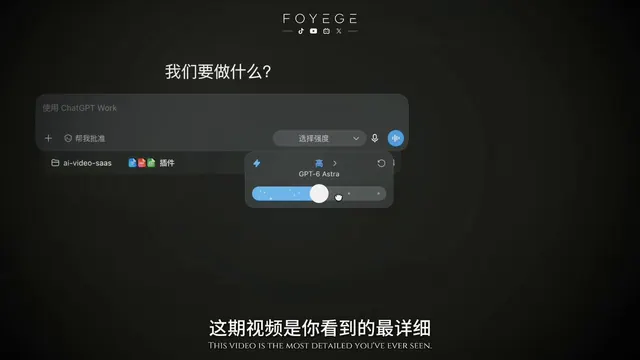
TAU Home documented the workflow through the experiments of creator Foyege, who reportedly spent 500,000 platform points and tested through the night. The method has since been repeated in other practical breakdowns.
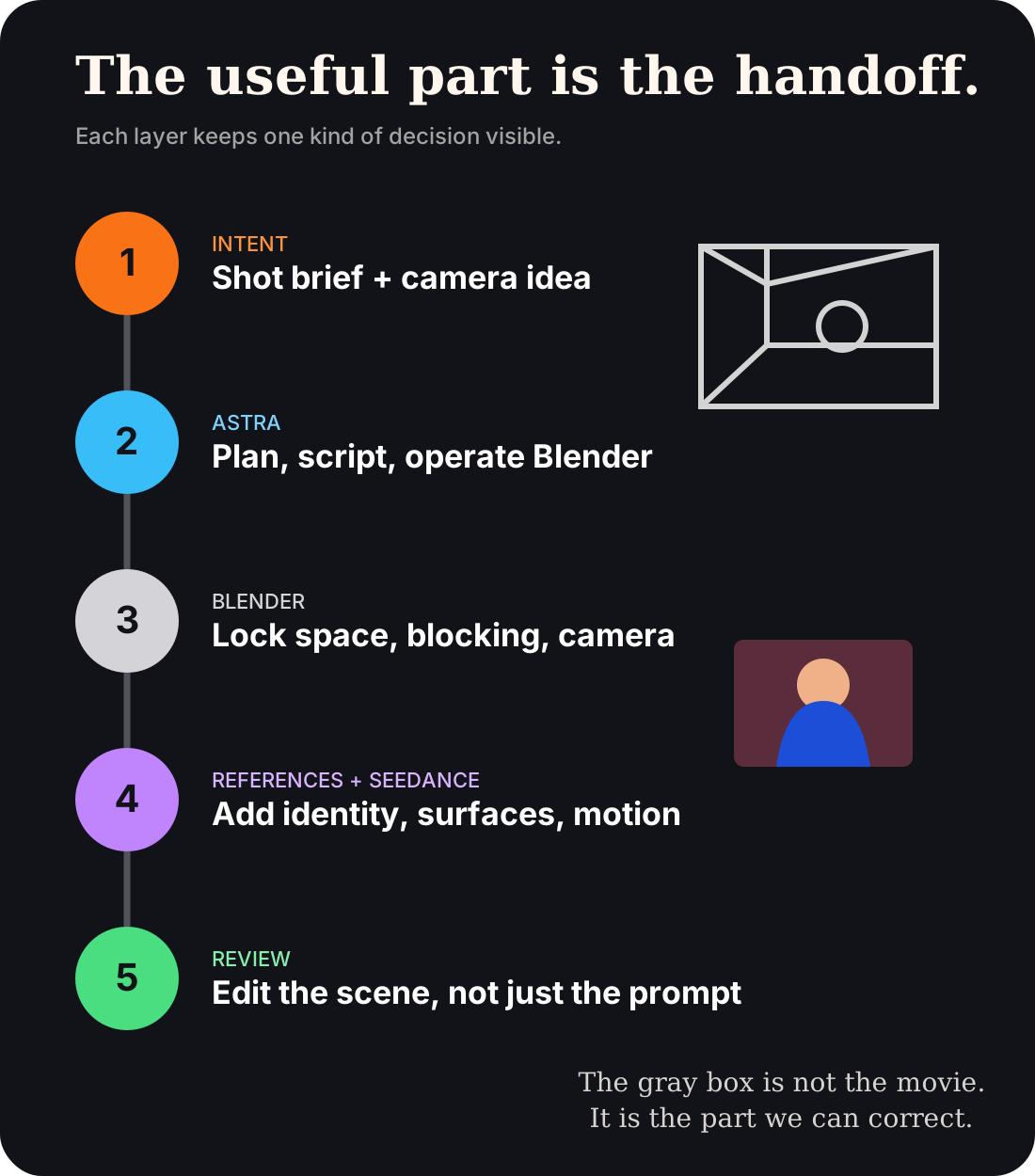
The division of labor is straightforward. A creator describes the scene and shot. Astra helps plan it and operates or scripts Blender. Blender holds the room, object positions and camera path. Reference images provide the character and visual style. Seedance turns the blockout and references into the finished moving image.
That distinction matters because “GPT-6 video” is an easy but misleading shorthand. OpenAI’s Astra launch showed the model building a house in Blender and converting it into a walkable Unreal Engine 5 scene. The company reported 95.9 percent geometric overlap on its BenchCAD tool-use test, compared with 83.3 percent for GPT-5.6 Sol and a reported 84.3 percent for Claude Fable 5.1.
BenchCAD is a geometry benchmark, not a measure of cinematic continuity. It supports the narrower claim that Astra can work inside 3D tools. It does not prove that the resulting video will preserve a face or obey physics.
Seedance performs the final generation. ByteDance says version 2.5 can accept as many as 30 image references, 10 video references and 10 audio references. Its clay-render workflow is designed to use a textureless 3D sequence as guidance for geometry, pose, movement, camera and blocking while other references supply appearance.
One model plans, one artifact remembers, and another model renders. The consistency comes from the arrangement, not from a single miraculous checkpoint.
Geometry is a better memory than another paragraph
Video models are very good at producing a plausible next frame. They are less dependable at maintaining an explicit map of a place across a complicated camera move.
A Blender scene does not have that problem. A wall stays where it was placed. A camera can travel behind a chair without asking a model to re-imagine the chair. Even a crude gray mannequin establishes where a body begins, which way it faces and how it moves through the room.
I think of the blockout as a spatial contract. It does not dictate the final texture of a coat or the mood of the light. It tells the generator which parts of the scene are no longer open to invention.
This reduces the burden on Seedance. The model can spend more of its capacity translating references into surfaces and motion because it is not simultaneously deciding whether the window belongs on the left wall or the right. The process is similar in spirit to older visual-effects pipelines, where layout and previsualization establish a shot before expensive finishing work begins.
The underlying idea is not new. The 2024 GPT4Motion project used language-model-generated Blender scripts and physical simulations to guide text-to-video generation. The 3D-GPT research project explored language-driven procedural 3D creation even earlier. What has changed is access: an agent that can see and operate a desktop application may turn those once-specialized techniques into a workflow more creators can attempt.
“Attempt” is the honest word. Blender has not become trivial, and the examples are not controlled studies. But the distance between describing a shot and obtaining a usable blockout has become shorter.
Astra makes previsualization cheaper—not automatic
Building a rough 3D scene is old filmmaking practice. It is also work. Someone has to set dimensions, choose a lens, position the camera, create proxy objects and animate the movement. For a three-second concept clip, that preparation can cost more time than repeatedly generating videos and accepting the least broken one.
Astra changes that calculation if it can reliably handle the repetitive setup. OpenAI’s Blender and Unreal demonstration, and practitioner tests including Aidan Stanik’s work with Blender scenes and character animation, suggest that a computer-using model can assemble meaningful parts of a scene rather than merely tell a user which menu to open.
I would not call this one-click previsualization. Agent-written scripts can fail. Geometry can intersect or be built at the wrong scale. A camera path may be technically smooth and dramatically dull. Somebody still has to inspect the scene.
But inspection is different from construction. If Astra can create the first usable version, a filmmaker can spend time moving the camera, correcting the staging and deciding what the shot should feel like. The blockout becomes disposable working material instead of a polished 3D deliverable.
That may be the more consequential creative use of an agent: not replacing the final artist, but making an intermediate step cheap enough that people stop skipping it.
Seedance gets a smaller problem
The Blender pass and the visual references answer different questions. The clay render says where. Character images and style frames say what it should look like. Seedance is asked to reconcile them over time.
This separation is important because reference images can carry unwanted baggage. A portrait may preserve a face but also pull in its background or lighting. A rough 3D render has almost no visual identity to contaminate the final image; it mainly contributes composition and movement.
The practical gain is control. If the camera is too close, the creator can change the lens or move it in Blender. If an actor crosses the room too quickly, the motion can be retimed. The next generation begins from an edited scene rather than a slightly revised sentence and another roll of the seed.
That does not mean geometry fixes everything. ByteDance acknowledges remaining problems with physical plausibility and interactions among multiple subjects. TAU’s account says rapid rotations can still distort faces. A coarse proxy cannot specify every finger movement, cloth fold or contact point, and a video model may invent badly in the gaps.
The workflow improves the odds of continuity. It does not turn a probabilistic renderer into a physics engine.
The rough scene is where a human can still argue
The part of this method I find most persuasive is not the final clip. It is the editable middle.
Pure text-to-video systems hide almost every production decision inside the model. When a shot is wrong, the creator can rewrite a prompt, adjust a control and try again. The feedback is indirect. There is no visible object called “the room” to correct.
A Blender file externalizes those decisions. The creator can point to the camera, the wall or the actor’s path. A director and a 3D artist can disagree about a composition while looking at the same scene. Versions can be saved. A mistake can be traced to layout, reference choice or generation instead of being dismissed as a bad seed.
This also keeps traditional visual skills relevant. Astra may lower the effort required to create geometry, but it does not know why a 35mm lens feels more intimate than a 20mm lens in a particular scene. It does not supply timing, performance or taste. People who understand blocking and cameras will probably get more from the agent than people who only know how to ask for “cinematic” footage.
The human has not disappeared. The point at which the human can make a precise decision has moved.
The workflow matters beyond these brand names
It is too early to know whether Astra and Seedance will become the standard pair. Models change, APIs close and today’s striking demo can look ordinary in six months.
The durable idea is the use of an inspectable intermediate representation. Language is good for intent. A 3D scene is good for space. A generative video model is good for turning constraints and references into moving pixels. Asking each medium to do what it represents well is more convincing than waiting for one model to internalize an entire production pipeline.
This is the kind of AI progress that is easy to overlook because the important artifact is a gray room with ugly proxy characters. It does not photograph well for a launch page. Yet it gives creators something the most beautiful black-box demo cannot: a place to make a correction without starting over.
The best new trick in AI video may not be a new way to generate. It may be learning what should be decided before generation begins.