
Google’s September 30 announcement starts with restricted access for cyber defenders. The model also targets long-running software and knowledge work, with a larger output allowance and introductory API prices.
01 · Tech News
Follow the AI industry.
189 reports following 66 companies and partnerships from model release to physical deployment.
All Tech News
Browse every report, including the current lead.
Tag: AI Models
7 articles · By source / event date · Page 1 of 1
OpenAI’s September 29 release lowers cached-input prices and reports gains over GPT-6 Sol. Its comparisons with Astra depend on the task and evaluation setup, while access remains split between Work, Codex and the API.
The September 28 release retains Sonnet 5’s base token prices, adds deployment safeguards and changes a setting developers need when migrating workloads that previously disabled thinking.
Meta’s Connect recap moves its hosted model API beyond preview, while coding tools, cloud partnerships and local weights give developers distinct routes into the Muse family.
Anthropic has released Claude Opus 5.5, the first model in its Claude 5.5 family, with lower listed token prices than Opus 5 and broad cloud availability. Biology and cybersecurity use remain subject to verification programs because Anthropic classifies the model as comparable to Claude Mythos 5.1 in those areas.
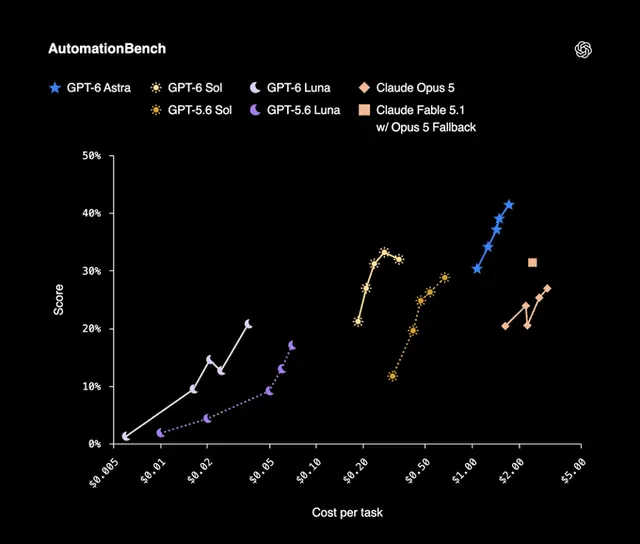
OpenAI has introduced GPT-6 Sol and GPT-6 Luna, adding cheaper models to its GPT-6 lineup while staging access across the API, ChatGPT Work and Codex. The release's performance figures are OpenAI evaluations, not independent benchmarks.
OpenAI and Anthropic cut API rates on September 22, but cheaper tokens do not automatically make a completed agent task cheaper. I read the price cuts as a lower ceiling on a bill—not an efficiency verdict—until teams compare cost, success, caching and retries on the same work.