
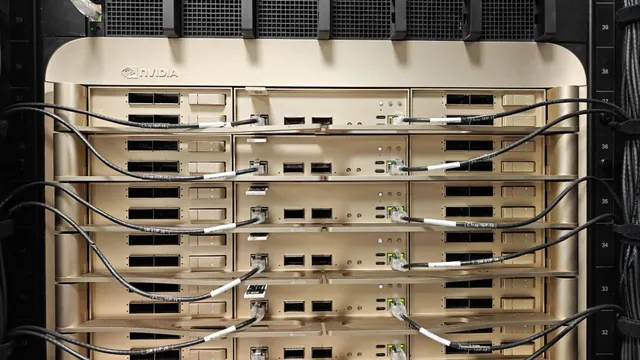
The Benchmark Shift: From Floating-Point Slogans to Integrated Racks
When hardware vendors publish benchmark records, the instinct is to look for a single, unit-free multiple. In the MLPerf Inference v6.1 preview cycle released on September 16, 2026, NVIDIA offered two striking headline numbers: up to 3.7x higher throughput than the prior-generation GB300 NVL72 on Qwen3-VL, and up to 2.5x on DeepSeek-R1. In one disclosed 72-accelerator VR200 configuration for DeepSeek-R1, the platform posted 1,183,327 tokens per second.
These are serious throughput figures. They demonstrate that NVIDIA’s upcoming Vera Rubin generation can move vast volumes of tokens through demanding, mixture-of-experts architectures. Yet the real analytical story is not the arithmetic raw score. As Jeffrey Kampman observed in July 2026 for Tom's Hardware, looking strictly at peak floating-point operations misses how Rubin is built. Inference performance at this scale is dictated by memory movement and rack-scale coordination, from individual silicon packages out to network fabrics and software runtimes.
The primary takeaway from MLPerf v6.1 is architectural: the standalone accelerator is no longer the fundamental atomic unit of AI computing. NVIDIA’s true product is the rack. By packaging 72 Rubin GPUs with 36 Vera CPUs into a coherent NVL72 assembly, NVIDIA is demonstrating system-level dominance under tightly controlled benchmark conditions. However, raw token throughput generated during a specialized testing run does not equal an enterprise purchasing case. Until infrastructure buyers see verified power consumption, actual system pricing, volume delivery schedules, sustained multi-tenant utilization, and production reliability, the economic case for Vera Rubin remains strictly unproven.
Under the Hood: The Rubin Engine and the Vera Co-Processor
To understand why the benchmark behaves as it does, one must look at how NVIDIA has balanced compute against memory bandwidth. In its official technical disclosures, NVIDIA describes the Rubin GPU package as an assembly featuring two compute dies mated to 288 GB of high-bandwidth memory (HBM4). This configuration yields an immense 22 TB/s of memory bandwidth. On the compute side, NVIDIA reports an upper ceiling of 50 sparse PFLOPS of NVFP4 inference performance.
These specifications require careful calibration. Peak arithmetic rates rely on NVFP4 precision and structured sparsity conditions, which cannot simply be assumed for every enterprise application without evaluating model accuracy and task tolerance. More importantly, arithmetic speed means little if memory buses starve execution units. As Kampman emphasized in his architecture analysis, the substantial bump in HBM4 bandwidth is the critical lever that keeps modern mixture-of-experts (MoE) models fed during generation phases.
The rack architecture also reflects an evolving perspective on agentic AI workflows. The NVL72 pairs 72 Rubin GPUs with 36 Vera CPUs. Rather than treating the central processor as a legacy host relegated to booting the operating system, NVIDIA positions the Vera CPU as an active runtime participant. It is explicitly designed to handle the serial bottlenecks that plague modern compound AI systems, such as harness logic, programmatic tool calling, input validation, and code compilation. By keeping these serial execution paths tightly coupled to the accelerators over high-speed interconnects, the hardware attempts to minimize the latency penalties incurred when models loop between reasoning, tool use, and generation.
What MLPerf Proves—and What It Does Not
The empirical anchor for Rubin’s performance is the MLPerf Inference v6.1 round in the Closed Division. The results substantiate NVIDIA's engineering execution, but they must be interpreted within strict methodological boundaries.
| Metric / Attribute | Qwen3-VL Benchmark Result | DeepSeek-R1 Benchmark Result |
|---|---|---|
| Benchmark Round | MLPerf Inference v6.1 (Closed Division) | MLPerf Inference v6.1 (Closed Division) |
| System Under Test | Vera Rubin NVL72 (72 GPUs, 36 CPUs) | Vera Rubin NVL72 (72 GPUs, 36 CPUs) |
| Baseline Comparison System | GB300 NVL72 (72 GPUs) | GB300 NVL72 (72 GPUs) |
| Reported Throughput Multiple | Up to 3.7x higher throughput | Up to 2.5x higher throughput |
| Benchmark Scenarios | Offline, Server, Interactive | Closed Division submission conditions |
| Software Serving Stack | vLLM with NVIDIA Dynamo | TensorRT-LLM |
| Developer Configuration Highlight | Standard Closed Division setup | 1,183,327 tokens/sec (72x VR200 setup) |
| Submission Status | Preview submission | Preview submission |
These measurements provide valuable data points, but the qualifying details matter immensely:
- The comparison is rack-to-rack, not chip-to-chip. The performance deltas measure an entire 72-GPU Vera Rubin NVL72 against a 72-GPU GB300 NVL72. The gains reflect the combined impact of HBM4, updated compute dies, Vera CPUs, higher-bandwidth interconnects, and newly optimized serving software.
- The term "up to" is not marketing filler; it reflects specific scenario ceilings. The 3.7x multiple for Qwen3-VL spans offline, server, and interactive scenarios, but performance gains vary depending on batch sizes, target latencies, and service-level objectives.
- Software runtimes are tailored to the workload. The Qwen3-VL numbers were achieved using vLLM coupled with NVIDIA Dynamo, while the DeepSeek-R1 results relied on TensorRT-LLM. A customer running an unoptimized serving stack or older runtime pipelines will not see these multiples out of the box.
- Submissions in this category carry preview status. MLCommons highlighted this round as showing strong generational gains on demanding MoE benchmarks. However, preview entries in MLPerf represent engineered proof-of-concept configurations rather than broadly shipping hardware operating under production constraints.
- In the same release cycle, NVIDIA reported video-generation results for WAN 2.2 on GB300 NVL72 racks. Those results belong strictly to the GB300 architecture and must not be conflated with Vera Rubin's benchmark ledger.
The Rack Brings the Facility Into the Product
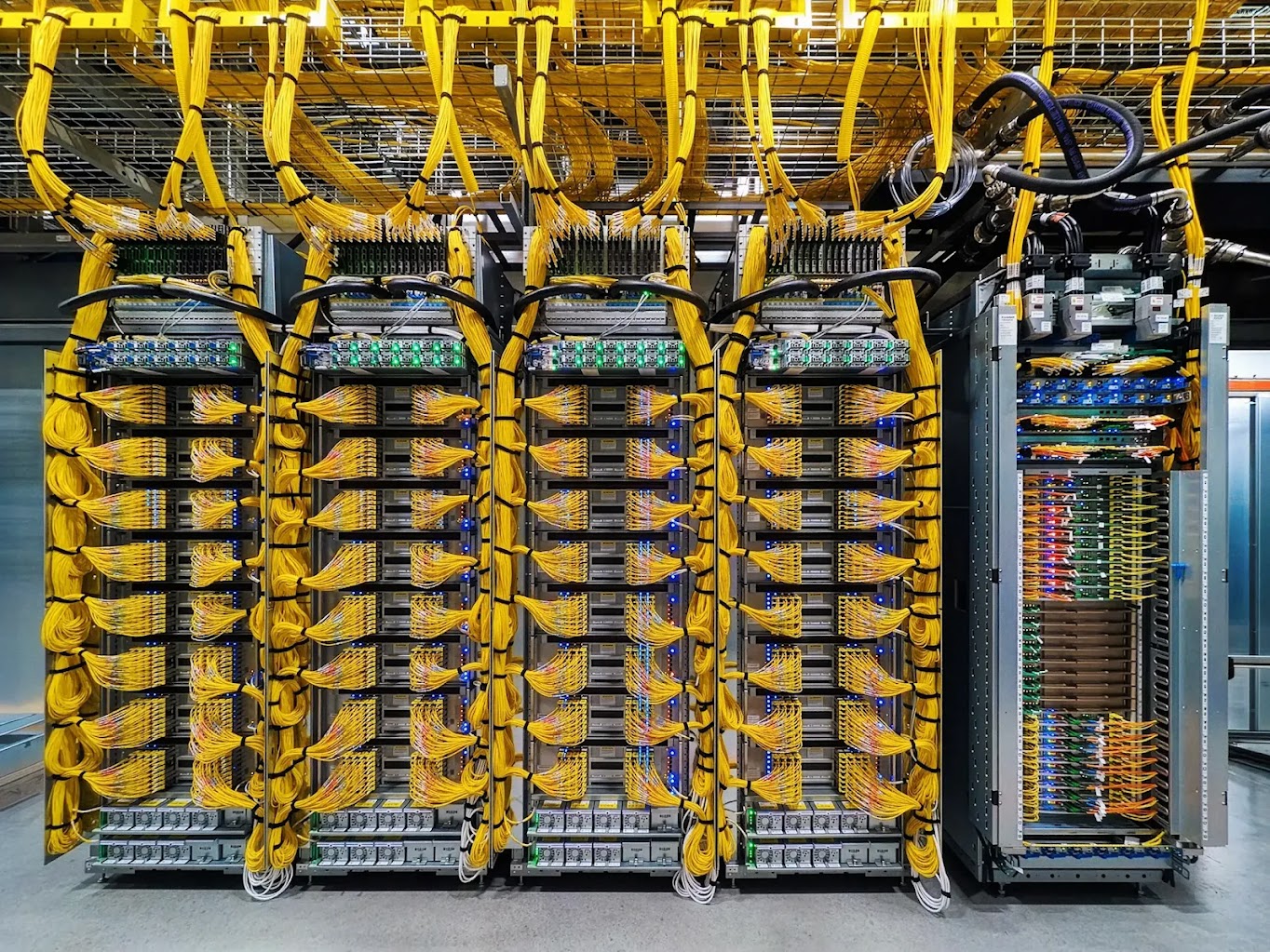
Because NVIDIA has defined the rack as the base unit of computing, the upstream requirements for deploying these systems have changed fundamentally. The Vera Rubin NVL72 is not an expansion card that can be slipped into existing data center floor space; it is a dense, high-thermal footprint installation that demands purpose-built facilities.
When an infrastructure team evaluates an NVL72 footprint, physical deployment constraints become the primary gatekeepers:
- Facilities and Power Delivery: Concentrating 72 high-performance GPUs, 36 CPUs, liquid-to-air or liquid-to-liquid cooling infrastructure, and dense power distribution within a single footprint pushes data center power requirements to extreme limits. If a data center cannot supply the megawatts and fluid handling required per row, the theoretical density of the rack cannot be realized.
- Interconnect and Fabric: The 22 TB/s of memory bandwidth per GPU and rack-scale NVLink coordination mean that internode latency is heavily suppressed within the rack. However, scaling beyond a single rack into multi-rack clusters introduces optical and network fabrics that dictate whether these throughput rates survive in massive distributed environments.
- Supply Chain Friction: Delivering an NVL72 requires synchronized supply chains spanning advanced TSMC packaging, high-volume HBM4 stacks, specialized power delivery stages, and complex rack-level liquid cooling manifolds. High theoretical throughput on an MLPerf preview sheet does not guarantee that enterprise customers can take delivery of full racks at volume within a reasonable operational window.
Throughput Is Not Cost per Useful Task
The central economic mistake in AI hardware procurement is conflating raw throughput—tokens per second—with cost per useful task. Benchmarks operate under saturation conditions. An MLPerf harness pushes a continuous, engineered stream of requests designed to evaluate hardware at maximum saturation.
Production enterprise environments do not operate like an MLPerf submission harness. Real-world inference is characterized by diurnal request curves, bursty traffic patterns, variable prompt lengths, mixed reasoning complexity, and strict tail-latency service level agreements (SLAs).
If a platform engineering team purchases a Vera Rubin NVL72, their real operational cost is not defined by token counters in an isolated test. It is dictated by the total cost of ownership (TCO): capital cost of the rack, data center floor space premiums, power and cooling overhead, software licensing, and fleet utilization rates. If an enterprise purchases a massive 72-GPU rack but averages only 35 percent sustained utilization because of unpredictable workload demand, the effective cost per generated token escalates rapidly.
The Vera CPU only improves task economics if the software pipeline actually uses it. If an application relies on decentralized microservices or off-rack agent dispatchers, CPUs inside the NVL72 may sit partly idle, turning an integrated advantage into silicon that never earns its keep. High throughput lowers cost per token only when the system stays busy and the application can exploit the whole rack.
The Moat Moves Up a Level
By making the rack the comparative standard, NVIDIA is altering the competitive playing field. Historically, rival chipmakers could compete on a socket-by-socket basis, highlighting better FP8 math, larger on-die SRAM, or a lower bill of materials for an accelerator card.
The Vera Rubin NVL72 neutralizes simple socket-level comparisons by shifting the evaluation criteria to the entire operational envelope:
- Architectural Entanglement: By tying Rubin GPUs directly to Vera CPUs, proprietary NVLink switches, custom network adapters, and specialized serving layers like Dynamo and TensorRT-LLM, NVIDIA makes it exceptionally difficult for buyers to unbundle components. A competitor cannot merely provide a competitive GPU; they must provide a competing CPU, interconnect fabric, cooling distribution system, and integrated software runtime that achieves equivalent cluster-wide orchestration.
- Hyperscaler Positioning: Cloud service providers and sovereign AI data centers gain a ready-made blueprint for high-density inference pods. This increases NVIDIA's platform lock-in, as enterprise platform teams increasingly deploy models against specialized NVL72 cluster abstractions rather than generic accelerator pools.
- Enterprise Lock-in: The reliance on specialized software layers to hit published numbers—such as vLLM coupled with NVIDIA Dynamo—means that extracting benchmark-level performance requires adopting NVIDIA's vertical serving stack. This dynamic narrows the viability of open, hardware-agnostic runtimes across mixed accelerator fleets.
The Invoice Is Still Missing
The analytical thesis put forward here is straightforward: Vera Rubin’s MLPerf debut proves that rack-scale architecture is NVIDIA's definitive performance engine, but it leaves the economic viability of enterprise adoption unproven until real-world operating costs and delivery parameters are revealed.
As an AI infrastructure buyer, I take the throughput result seriously, but I would not let a rack benchmark finish a purchasing argument that has not yet shown me the electricity, price, utilization, and failure behavior.
This thesis would be disproved or materially weakened if subsequent evidence shows:
- Linear Total-Cost-of-Ownership Advantages: If independent production deployments demonstrate that the NVL72’s acquisition and facility operational costs fall so steeply that it delivers an unambiguous reduction in cost per useful task even under low (30–40%) utilization and fragmented enterprise traffic.
- Radically Superior Energy Efficiency: If independently measured wall-clock power data shows that an NVL72 draws substantially less power per completed end-to-end task than equivalent GB300 clusters, neutralizing data center power delivery bottlenecks.
- Broad Availability and Unmodified Software Parity: If enterprise infrastructure teams receive high-volume shipments and achieve the published 2.5x to 3.7x throughput gains using completely unoptimized, general-purpose open-source frameworks without requiring custom NVIDIA Dynamo or TensorRT-LLM configurations.
Until those verifiable production signals arrive, platform architects should treat the MLPerf v6.1 numbers for what they are: a remarkable validation of rack-level system engineering, and an incomplete blueprint for enterprise inference economics.