
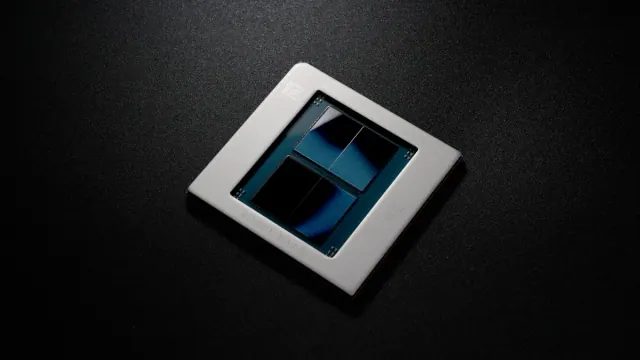
Amazon Web Services has widened regional availability for its latest Arm-based compute families, adding local access points across the Asia-Pacific region, Europe, and AWS GovCloud.
01 · Tech News
Follow the AI industry.
179 reports following 64 companies and partnerships from model release to physical deployment.
All Tech News
Browse every report, including the current lead.
179 articles · By source / event date · Page 7 of 9

A CEO appointment is also a product decision. By choosing Anil Chakravarthy, Adobe appears to be betting that its most durable advantage lies in enterprise data and workflow—not in owning every creative act.
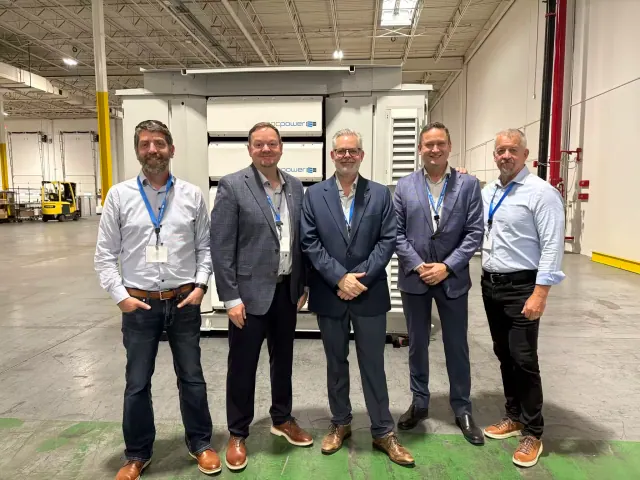
Flex is paying $4.4 billion for EPC Power to capture the electrical conversion layer inside the data center. Higher voltages and sub-second control can reshape how compute clusters draw energy, but they cannot manufacture new electrons.

NVIDIA's $12.9 billion agreement to acquire Hugging Face turns the open ecosystem's town square into an asset owned by the dominant chipmaker. Neutrality does not disappear on the day ownership changes, but it stops being an assumed reputation and becomes an engineering contract that developers must continuously measure.
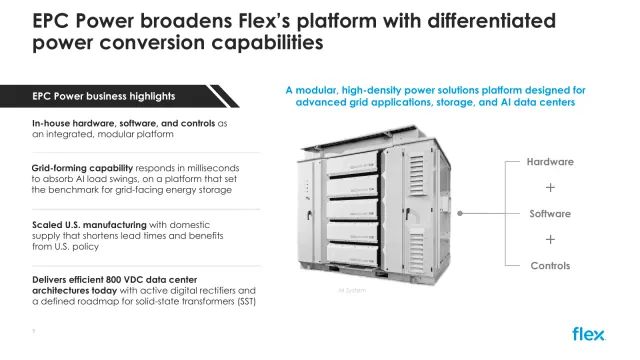
The proposed acquisition would add U.S.-based power-conversion technology for 800V DC data-center architectures, subject to customary closing conditions.

OpenAI's GPT-6 Astra can finish some agent tasks in fewer steps while raising the stakes of unsupervised execution. Efficiency is part of the case for Astra; it is not a reason to give the model more authority.
The proposed deal would connect an AI accelerator supplier with a major open-model platform. Closing is expected in the first half of 2027, subject to customary conditions and regulatory approvals.

OpenAI has introduced GPT-6 Astra, pairing expanded developer controls for autonomous workflows with its first Critical cybersecurity rating under internal risk rules.
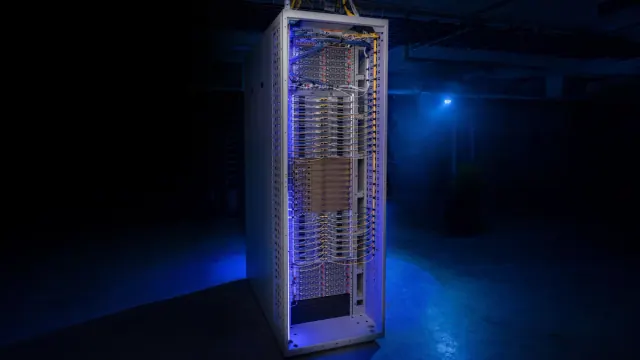
Live GPU services, early rack deployments, and planned data centers represent different stages of AI expansion. Recent announcements show why their capacities and performance claims need to be read separately.
Google has launched Gemini 3.8 Flash for general availability alongside a restricted security variant, pairing temporary introductory API rates with an advisory that complex tasks may consume more tokens.

Google kept the introductory token rate identical to its predecessor, but one independent test found that higher reasoning effort and extra agent loops pushed the cost of finished work up by roughly 40 percent.
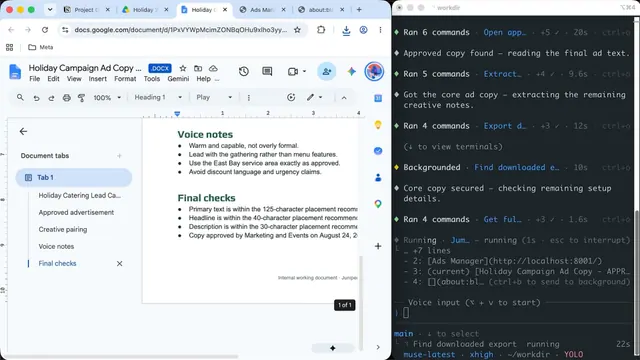
Muse Spark 1.3 makes Meta credible as a frontier API vendor. Whether it becomes infrastructure other companies can own still depends on three artifacts Meta has not released.
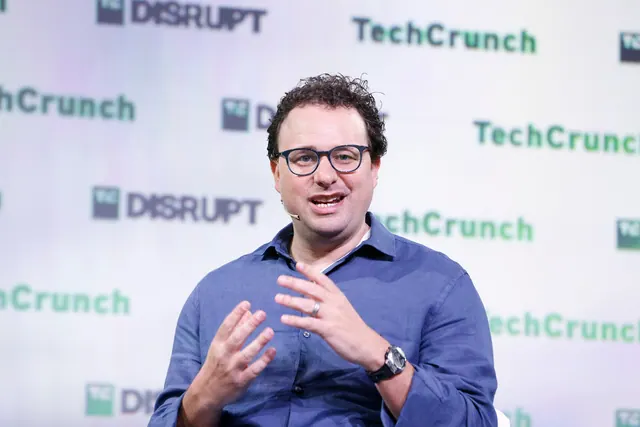
Anthropic’s Fable 5.1 and Mythos 5.1 share the same underlying model but not the same rules of engagement. That split is more important than another week at the top of a benchmark chart.

Anthropic has introduced Claude Fable 5.1 for general use and Claude Mythos 5.1 for vetted research partners, pairing the identical underlying model with divergent safeguards while reducing prompt cache-read prices by 75%.
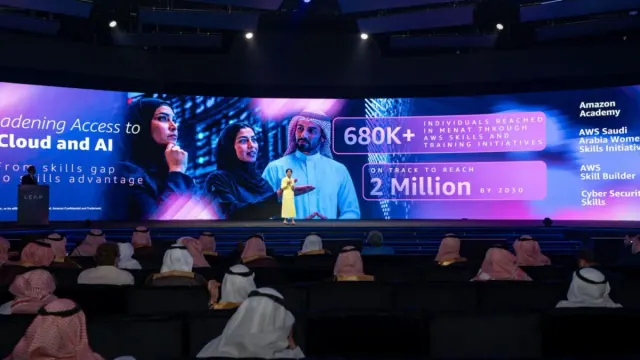
Amazon Web Services plans to launch its first in-country cloud infrastructure region in Saudi Arabia by December 2026, offering domestic data residency before bringing a separate, high-density AI compute zone online by 2028.
MediaTek will use NVIDIA’s NVLink Fusion platform to integrate customer-designed accelerators into rack-scale data centers, backed by a $3.5 billion convertible bond investment.

Production compute powered by AMD Instinct accelerators and Cisco Silicon One networking is now serving local and international customers, with plans to scale capacity up to 1 GW by 2030.
Tencent has launched and open-sourced its sparse Hy4 preview model, pairing a million-token context window with hosted tool access, developer APIs, and introductory free tiers.

Amazon Web Services and NVIDIA plan to deploy two million additional GPUs across 2027 and 2028, expanding future hardware commitments alongside custom interconnects, federal clusters, and robotics integrations.

Figure has publicly launched Index, a mobile crowdsourcing application designed to collect real-world physical manipulation video for its Helix robotics stack.