
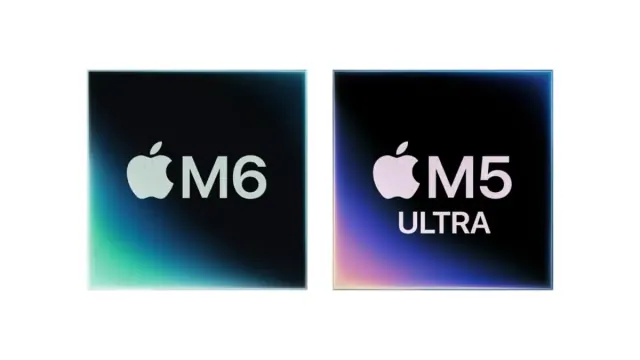
Apple introduced the 2 nm `M6` chip in the Mac mini and the multi-die `M5 Ultra` in the Mac Studio, scaling on-device memory bandwidth and capacity for local AI workloads.
01 · Tech News
Follow the AI industry.
179 reports following 64 companies and partnerships from model release to physical deployment.
All Tech News
Browse every report, including the current lead.
179 articles · By source / event date · Page 8 of 9

Intel detailed three complementary silicon architectures at Hot Chips 2026, pairing upcoming server CPUs and inference GPUs with its already-launched Core Series 3 edge processors.
Preliminary internal evidence that an upcoming model could hit critical cybersecurity risk thresholds prompted OpenAI to pause reinforcement learning runs, isolate research networks, and introduce continuous monitoring that adds an estimated 20% compute overhead.

GPU Cloud revenue grew rapidly from a year earlier, while online marketing revenue remained under pressure and total group revenue fell 4%.

Google has made `Gemini 3.7 Flash` available across its developer and enterprise channels, pairing behavioral updates for multi-step agent planning with introductory pricing through late 2026.
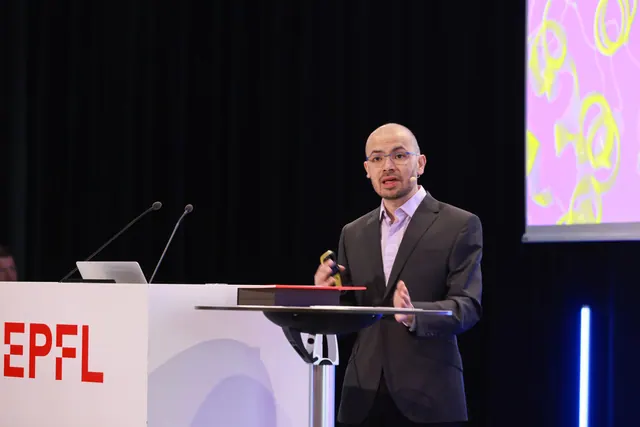
Demis Hassabis keeps the scientific authority. Koray Kavukcuoglu gets the delivery machinery and a direct line to Sundar Pichai. That is less a conventional succession than an admission that Google DeepMind had become two jobs wearing one title.
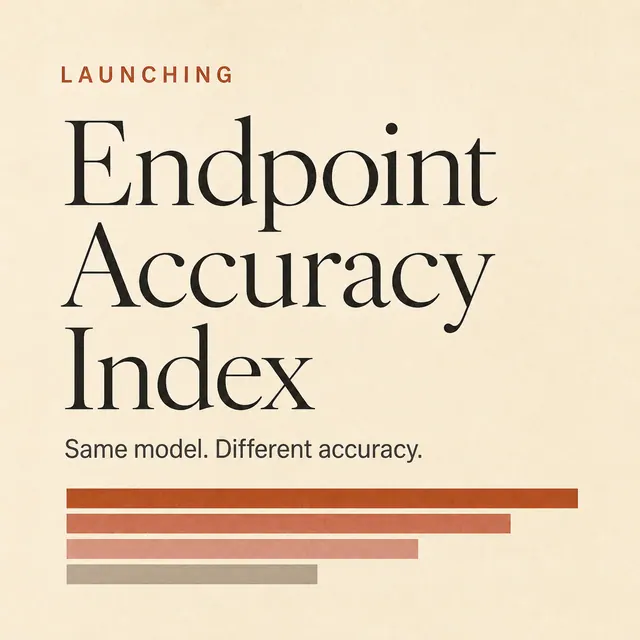
Open weights make a model portable, but they do not make hosted endpoints identical. Quantization, limits, parsers and plain software bugs can turn one model name into several products.

The specialized cloud provider has announced its first Asia-Pacific expansion across three planned facilities, setting a multi-year target that does not alter near-term compute availability.

Alibaba’s Qwen3.8 puts a 2.4-trillion-parameter model in public repositories. That is a real expansion of freedom—but mainly for organizations already equipped to operate industrial AI infrastructure.

Alibaba Cloud has registered `qwen3.8-max` in its Model Studio catalog, pitching the 2.4-trillion-parameter model for multi-day autonomous software development and native multimodal workflows.
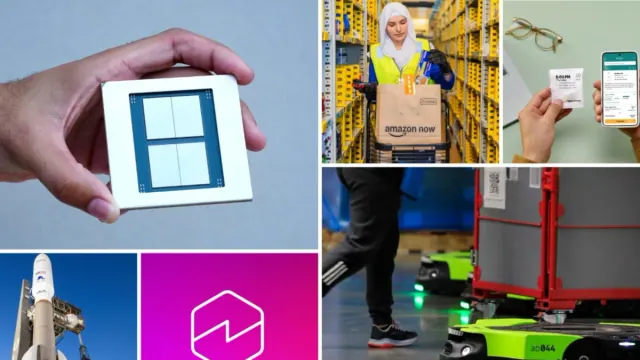
Amazon disclosed multi-year, multi-gigawatt Trainium capacity commitments from Anthropic and OpenAI alongside triple-digit growth in its custom silicon and cloud AI divisions.
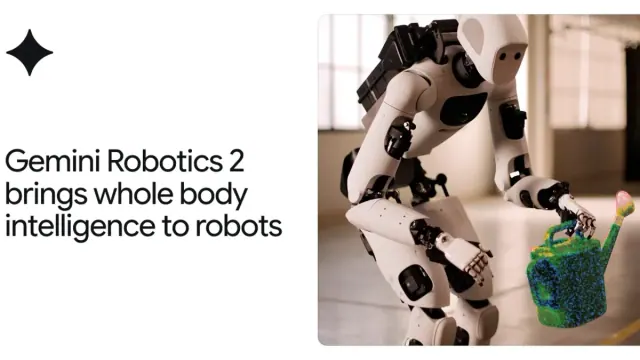
Google DeepMind demonstrated whole-body coordination on Apptronik’s Apollo 2 humanoid while limiting motor-control models to early-access partners.
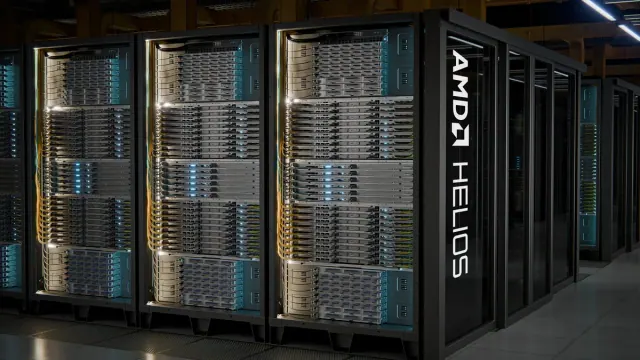
AMD has launched its first factory-integrated AI rack system, combining 72 Instinct `MI455X` GPUs with 18 sixth-generation `EPYC` processors. AMD says MI455X GPUs are in production, while customer rack deployments are planned over late 2026 and 2027.

NVIDIA has started deploying its liquid-cooled Vera Rubin NVL72 racks across five infrastructure partners, within a broader platform spanning seven chips and five rack tray types.
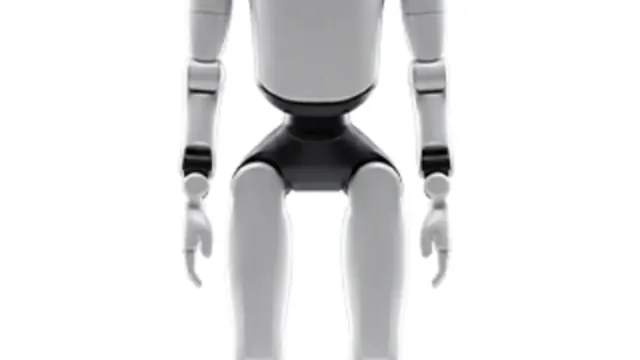
The lineup spans a full-size humanoid, a modular research platform, a wheeled task robot, and a direct-drive dexterous hand, shifting away from a single general-purpose form factor.
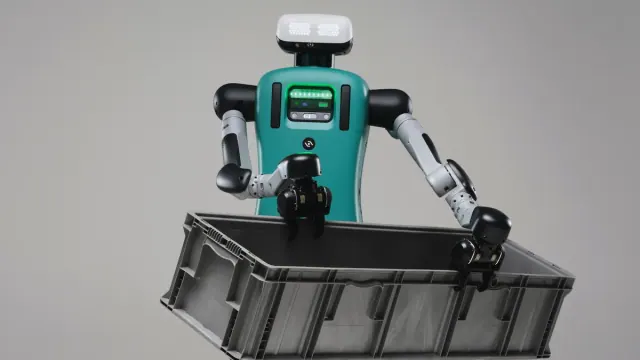
The 60,000-square-foot California engineering site will develop and test software capabilities to support commercial warehouse and factory deployments, leaving hardware assembly in Oregon.

Xiaomi has released technical details for `Xiaomi-Robotics-U0`, a 38-billion-parameter autoregressive foundation model that couples general image synthesis with robotic scene generation, video rollout, and training-data augmentation.
Meta has launched a developer public preview of Muse Spark 1.1 on its new Meta Model API alongside immediate consumer access in Meta AI, highlighting active history compaction within a 1-million-token context window.
Xiaomi has introduced its MiMo-V2.5 model family for multimodal reasoning and autonomous tool workflows, removing context-length credit multipliers from its Token Plan and offering a two-week trial via Hermes Agent.

Enterprise buyers are being asked to treat multimodal tool use and coding scores as evidence of business output. But moving from a benchmark score to economic return depends on the unglamorous friction of permissions, harnesses, and human review.