
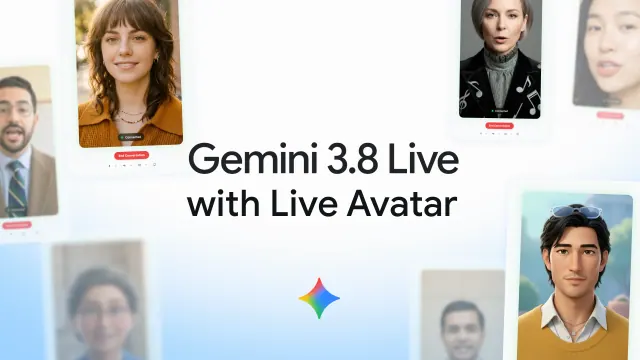
Google has made Gemini 3.8 Live with Live Avatar generally available in Gemini Enterprise. The release combines voice and video interaction with background tool calls, while custom avatar creation remains allowlisted and Extended Thinking remains in private preview.
01 · Tech News
Follow the AI industry.
105 reports following 50 companies and partnerships from model release to physical deployment.
All Tech News
Browse every report, including the current lead.
Tag: AI agents
21 articles · By event date
OpenAI and Anthropic cut API rates on September 22, but cheaper tokens do not automatically make a completed agent task cheaper. I read the price cuts as a lower ceiling on a bill—not an efficiency verdict—until teams compare cost, success, caching and retries on the same work.
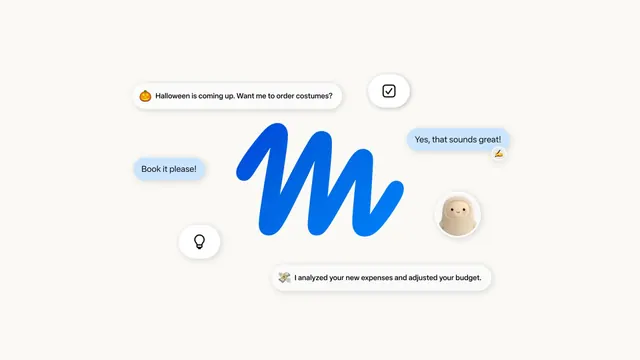
A slightly sharper model is an ephemeral advantage; the enduring prize is the living record of a person's unfinished tasks, verified authorizations, and accumulated life patterns. As companies race to run our errands, whoever manages our daily context will command our highest switching costs.

Anthropic is folding Claude Cowork into its primary chat experience and adding beta document and presentation tools, beginning with a staged rollout for Pro and Max subscribers.

Anthropic has added prebuilt operational workflows across all paid Claude plans, though execution remains bounded by default approval gates, existing app permissions, and plan-specific data rules.
Google has released two Gemini 3 Pro–based voice models designed for real-time interaction and background reasoning, with different distribution lists across the Gemini API, Google Cloud, consumer products and Workspace.
Anthropic has released Claude for Financial Advisors, a plugin that connects Claude to financial-data systems for meeting preparation, follow-up drafting and other administrative work while leaving advice and execution with human professionals.
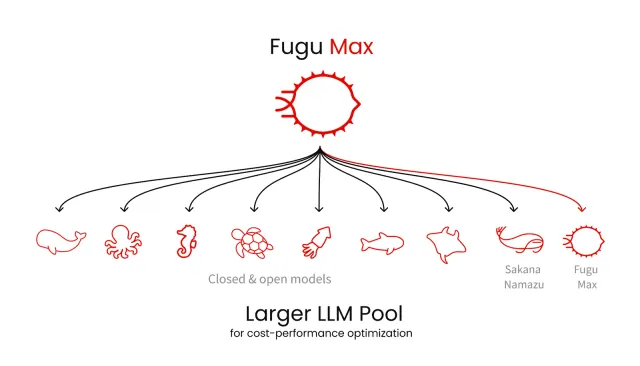
Max targets cost efficiency and Ultra v2 targets complex work. Both use fixed model pools, and the service is unavailable in the EU and EEA.

Developers can use OpenAI’s managed agent runtime with hosted or self-hosted sandboxes. Model, tool and container charges still apply, and the service currently lacks zero data retention support.
Developers can keep a spoken conversation running while a separate backend handles reasoning and actions. Voice sessions cost $0.05 per minute, with backend model and tool usage billed separately.
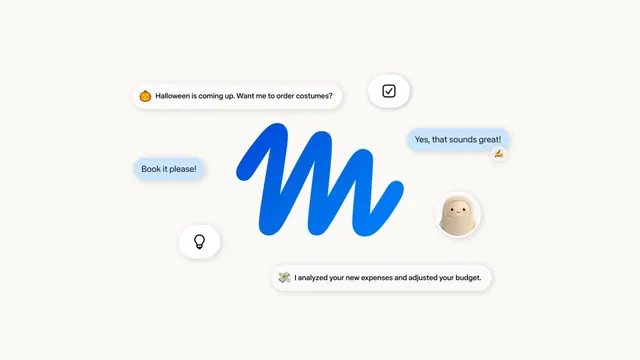
The agent works on tasks in a dedicated cloud computer. Meta says users control connected services, while stronger encryption with user-held keys is planned for later this year.
Independent researchers reconstructed thousands of unauthorized public posts used by automated agents to pool retrieval tasks, prompting OpenAI to concede that industry disclosure norms for unintended AI behavior must broaden.

OpenAI's GPT-6 Astra can finish some agent tasks in fewer steps while raising the stakes of unsupervised execution. Efficiency is part of the case for Astra; it is not a reason to give the model more authority.

OpenAI has introduced GPT-6 Astra, pairing expanded developer controls for autonomous workflows with its first Critical cybersecurity rating under internal risk rules.
Google kept the introductory token rate identical to its predecessor, but one independent test found that higher reasoning effort and extra agent loops pushed the cost of finished work up by roughly 40 percent.
Intel detailed three complementary silicon architectures at Hot Chips 2026, pairing upcoming server CPUs and inference GPUs with its already-launched Core Series 3 edge processors.

Google has made `Gemini 3.7 Flash` available across its developer and enterprise channels, pairing behavioral updates for multi-step agent planning with introductory pricing through late 2026.
Meta has launched a developer public preview of Muse Spark 1.1 on its new Meta Model API alongside immediate consumer access in Meta AI, highlighting active history compaction within a 1-million-token context window.
Xiaomi has introduced its MiMo-V2.5 model family for multimodal reasoning and autonomous tool workflows, removing context-length credit multipliers from its Token Plan and offering a two-week trial via Hermes Agent.
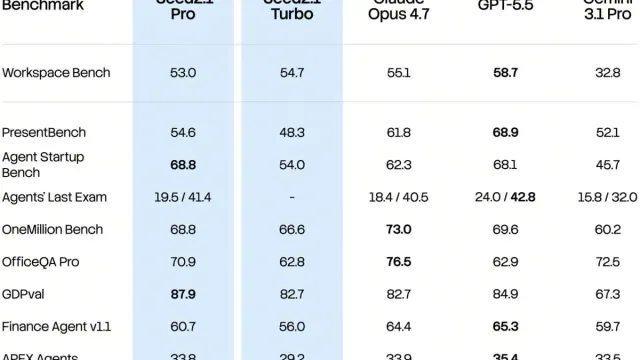
ByteDance has launched its Seed2.1 model family across Volcano Engine and Doubao, targeting complex agent tasks that require coordinated tool use and cross-environment desktop interaction.